Guest Post: Author Jeremy D. Holden

Today’s post is a guest post by the very talented author Jeremy D. Holden. I have had the great pleasure of reading and reviewing both of his novels (Sea of Doubt and Valley of Time), and when I reached out, he kindly agreed to write a guest post for my blog. As many of us here in the book blogging community are writers and aspiring authors, I asked him to speak about his approach to writing novels. 
I am incredibly honored that I have had this chance to work with him to promote his fantastic series–the Mal Thomas Mystery Series! Please make sure to check out Jeremy on his TwitterGoodreads, and Amazon author page. There are also links to the Goodreads pages of his individual titles scattered throughout, so definitely make sure to check those out as well!

How I approach writing my novels

8385563Ariana had asked me to write some thoughts around how I approach writing my novels for her excellent blog, and I was more than happy to oblige.

For me, writing a novel is akin to painting a landscape that you may have glimpsed in the past, but aren’t able to look at while you’re painting it.

I spend months just thinking about the scene, imagining and remembering things which are relevant to the overall vista. At first, they appear to be dissonant elements, each of which is somewhat out of focus, but then the more I think about them, the more they crystalize in my mind.

I very consciously never write down any of these elements, for fear that if I do they will be fixed in time, and therefore unable to evolve in my consciousness as they need to.

This process of letting the different elements of the painting appear often takes about six months, before I’m ready to start seeing how they might begin to fit together. I never push things at this stage, but rather allow my unconscious mind to make the connections as it sees fit.

All at once there will be a realization that the various strands are ready to form together into something resembling a cohesive whole. At that point, perhaps on a wet afternoon or in the wee hours of the morning, for the first time I’ll allow my mind to fully let things start to form together.
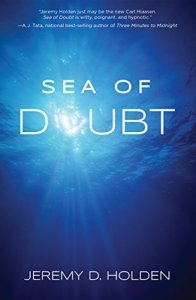
seaofdoubtOnce I’ve arrived at this point I still won’t write down everything that has formed, because I’m loathe to shape the story prematurely. So, I will let this partially visible landscape sit with me for a number of weeks, as the infant chapters continue to assemble.

Sometime during this period I’ll recognize that a barrier or hole exists in the connected narrative, and in order to stitch it together, I’ll go and swim laps. Something about being fully immersed in water and the sensory deprivation, allows me to think with greater clarity.

And then, because I haven’t been greedy or impatient in my desire to rush its inception, I’ll be rewarded with the recognition that I’m ready to layout the complete flow of the story.

In the case of Sea of Doubt and Valley of Time, as well as with the new novel I’m working on, Halo of Power, I’ve been able to have a summary outline written in just several days, because the narrative is already formed in my mind.

From there, in each case it has taken just five weeks to have an early draft of the full novel completed. When I tell people that they are often surprised at the short time period, but in reality the full creative process I’ve described actually takes closer to nine months.

And of course, during those roughly five weeks, it isn’t a simple process of direct translation from my fixed thoughts, as the inventive mind is fully engaged, and the story is still being refined in real time. With each book, at least twenty percent of the storyline was created during the writing period itself.

valleyoftimeI prefer to write my books in January, after the distraction of the holidays is passed, and while the longer winter nights and colder weather is upon us. And in truth I don’t sleep a lot, often going to bed at ten and getting back up at midnight and working through until the early hours, at which point I might go back to bed for a couple more hours sleep.

There is a tangible sense of fear during those five weeks that if I don’t write down the thoughts as they are forming, that they’ll be lost to me, so I never resist the instinct to write, whatever time of day or night.

And there are periods when I lose track of time and myself with it, as I’ll seem to wake from unconsciousness to discover that a thousand words has miraculously appeared.

I still have a full-time job running Clean, our branding agency, and have wondered if I’ll have the ability and desire to write more than one novel a year when I do one-day retire.

Part of me would like to think I could, and yet I consider being given stories to tell to be the greatest of gifts, and so I’m loathe to abuse that privilege by writing more than my allocated quota.

Review: Valley of Time by Jeremy D. Holden

valleyoftimeValley of Time: The Greatest Journey Ever Taken by Jeremy D. Holden

My Rating: 4/5 TARDISes

Series: Mal Thomas Mystery Series #2

Date Published: November 5th, 2017

Publisher: Clean Publishing

Pages: 262 pages

Source: Publisher

Links: Goodreads | Amazon | Book Depository

Synopsis: Fast-paced, full of wit and humor, and sure to delight fans of authors like Carl Hiassen and Nick Hornby, “Valley of Time: The Greatest Journey Ever Taken” is a truly original novel from one of contemporary fiction’s most thrilling new voices. 

Mal Thomas only escaped with his life through a mixture of good fortune and divine intervention, after he and his eclectic team of cynical mad men and women were charged with promoting the alleged second coming of the Messiah, by Alfredo Baptiste, the world’s most powerful industrialist. 

Having subsequently become famous as a best-selling author—as well as an unlikely spiritual leader—after having written and promoted a book about those experiences, Mal is now approached by another enigmatic billionaire with an equally incredible proposition.

Huw Hudson, the man often described as a modern-day Howard Hughes, wants to position his company, Space Rider, as the leader in commercial space tourism. He tries to enlist Mal and his team to help promote it, with one extraordinary twist: Hudson has evidence of an alleged UFO encounter, which he thinks could damage his business plans, and he asks Mal to investigate and manage the breaking news story.

Mal discovers a deeper purpose at work, as he crisscrosses Brazil, Miami, London, and Dubai in furtherance of Hudson’s audacious ambition, while being forced to keep an unbelievable secret from the FBI and even his closest friends. In confronting his deepest fears, Mal takes us on a journey that challenges the very core of our beliefs about space and time.  

In a fast-moving and often sardonic narrative, author Jeremy Holden will have you fascinated by the extraordinary nature of the challenges that Mal and his team find themselves confronted with, as they launch a massive global campaign to promote one of the most seismic events in human history.

“Valley of Time” provides a window into the modern world of digital and social media-driven mass persuasion, while posing this pivotal question: What if you could go back to the pivotal moment in time that shaped your life. Would you try to alter your fate?

____________________________________________________________

*I received a copy of this book from the publisher in exchange for an honest review*

This is a spoiler-free review.

Given how much I enjoyed Sea of Doubt, I eagerly jumped into this novel as soon as I had finished, excited for more adventures with Holden’s very loveable characters. And I was not disappointed in the least—this is a wonderful follow up to the first story. Though I think that I slightly preferred the first story, this one is another fast and extremely entertaining read. And the comedy is superb. Holden knows how to captivate his readers and hold them all the way through the final page. I just have so much fun with his work—I’ve completely fallen in love with it.

In Valley of Time, we are back again to witness another crazy situation Mal finds himself in, as well as to see further examples of the incredible skills he and his entire CREATIF team possess when it comes to advertising outrageous subjects. And this time around, they are presenting an astonishingly major scientific development that will forever change humankind—space tourism.

Huw Hudson, the creator of a company called Space Rider, reaches out to Mal for help promoting his offered space tourism, with the goal of establishing Space Rider as the top company in the world. He also tips Mal off about some alleged evidence of extraterrestrial life popping up around the world. Sworn to secrecy, Mal is put in charge of investigating these reports as well as controlling the portrayal of these stories—and Space Rider’s accomplishments—in the media. As things progress, Mal uncovers a hidden purpose in the background of these events, one that challenges what the world knows about space and time.

At the start of the novel, I was feeling a little bit apprehensive due to the fact that it begins very similarly to the previous story in this series. However, it becomes obvious fairly quickly that the plot is going in a completely unique direction. Once again, Holden’s character depiction and development is top-notch and still my absolute favorite part of these novels. I cannot talk enough about how much I love everyone and how he involves them in the events of the plot. This is a very character driven novel, and those characters are some of the strongest I’ve seen.

Holden’s writing continues to be quite easy to fall in to, and his style of storytelling is highly engaging. He weaves very fascinating and extremely unique plotlines full of adventure and excitement. Just like the previous one, I found this story to be full of surprises, and I never really guessed what was coming next or how things would resolve. Holden manages to turn the very fictional elements into something that feels believable—it’s easy to imagine Mal going through these experiences.

Again, one of the only complaints I have in regards to the writing itself is that there is far more telling rather than showing in this novel. With this particular plot, as opposed to the first novel, that style of narrative slows things down quite a bit more. There is a lot of talk about science and technology, so the story is very description heavy. The balance between this and the action is a bit unequal, and even though I am a huge fan of science fiction and, in particular, anything to do with time travel, even I felt like the narrative got slightly bogged down a few times.

Overall, I thoroughly enjoyed Valley of Time, and continue to love Holden’s plotlines and characters. I’ve heard numerous people say that this novel works as a standalone, and while the plot is unique in itself and does not give away much information about the first book, there are still enough important, potentially vague references made that these stories should really be read in order—I personally feel this would make for the most enjoyable reading experience. As with the first novel, I am extremely glad that I got the chance to read this, and I am very much hoping there will be plenty more installments in this series in the future. I very highly recommend giving these novels a read.

4.0 TARDISes

logo2

Mini Review: Smoke & Mirrors by Michael Faudet

smokeandmirrorsSmoke & Mirrors by Michael Faudet

My Rating: 2.5/5 TARDISes

Series: Standalone

Date Published: November 14th, 2017

Publisher: Andrews McMeel Publishing

Pages: 240 pages

Source: Netgalley

Links: Goodreads | Amazon | Book Depository

Synopsis: Smoke & Mirrors is the third book from internationally bestselling poet Michael Faudet, author of Bitter Sweet Love and Dirty Pretty Things—both finalists in the 2016 and 2015 Goodreads Readers Choice Awards.

Michael Faudet’s latest book takes the reader on an emotionally charged journey, exploring the joys of falling madly in love and the melancholy world of the brokenhearted. Beautifully captured in poetry, prose, and short stories, Faudet’s whimsical and sometimes erotic writing has captured the hearts and minds of thousands of readers from around the world.

____________________________________________________________

*I received a copy of this book from the publisher in exchange for an honest review*

Smoke & Mirrors was just one of those collections that did not click with me. The quality of writing and the messages being conveyed were not completely lost on me. The poems were generally comprehendible, and I was able to immerse myself in the work enough to get through to the end—but that was about it. At times, Faudet’s style was quite off-putting, and that caused a massive disconnect for me and blocked out any important ideas and themes. I found nothing really stood out, nothing touched me or had the impact that the author clearly intended his writing to have.

This collection as a whole does not seem like it would be easily accessible to a wide variety of readers. To me, these poems were not very poetic. The poems that had more of that proclaimed “whimsy” to them were the ones that I enjoyed the most. There were displays of love, heartbreak, happiness, and loss. These poems spoke to me—they were subjects I could connect to—and he phrased these topics in a beautiful way. Through the very beginning of this collected work, I felt much more engaged.

But then, many of the other poems in the next two thirds or so seemed very rough and graphic, taking away any lyrical aspects of the writing. Part way through the collection, the subject matter shifts abruptly into much more mature topics, which in itself is not an issue at all—poetry deals with all sorts of topics, from basic emotions to the more intimate aspects of life. The trouble I had was with the way he worded these things. I just found myself feeling uncomfortable, sometimes verging on disgusted. Again though, this is my personal opinion—definitely not a reflection of how everything comes across to every reader.

I read many positive reviews of Faudet’s work prior to picking this collection up, and I can see how his subject matter and use of language would appeal to some people. His subject matter and voice are, like most poets, very singular and attract different types of readers. This particularly came across as a very niche style—the way he portrays his thoughts and feelings is very unique and very direct. However, his writing was just not for me, and I don’t think I will be picking up any of his other collections in the future.

2.5 TARDISes

logo2

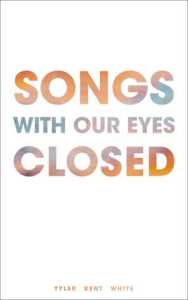
Mini Review: Songs With Our Eyes Closed by Tyler Kent White

songswithoureyesclosedSongs With Our Eyes Closed by Tyler Kent White

My Rating: 5/5 TARDISes

Series: Standalone

Date Published: January 30th, 2018

Publisher: Andrews McMeel Publishing

Pages: 192 pages

Source: Netgalley

Links: Goodreads | Amazon | Book Depository

Synopsis: A collection of Tyler Kent White’s powerful poems about love, loss, depression, and resilience. “Never apologize for burning too brightly, or for collapsing into yourself every night. That is how galaxies are made.” – Tyler Kent White

Many of the poems included here are short and uplifting, with messages such as “be yourself,” “you are beautiful,” and “this too shall pass.” They combine the appeal of short, shareable poems with inspiration and encouragement. Also included are some of White’s lengthier, prose-poetic pieces, which address his childhood, his relationship with his father, and past romantic relationships, among other things. Whatever the form, White takes inspiration from the everyday, writing about abstract topics like love, loss, depression, and resilience using concrete, relatable details and scenes.

____________________________________________________________

*I received a copy of this book from the publisher in exchange for an honest review*

I found this poetry collection to be beautiful and extremely well written. Songs With Our Eyes Closed is another example of a recently very popular style of writing—short but impactful poetry and prose. This is a format where a positive outcome is hard to accomplish, and it is definitely not a format that suites the tastes of all readers nor the abilities and voices of all poets. And it’s very true that this type of writing can easily come across as shallow, random, and repetitive. However, I find that this can also be an incredibly powerful and meaningful way to convey many emotions—that was definitely the case for this particular collection.

White’s writing is full of both beauty and sincerity. Even the shortest poems always feel that they were given an equal amount of time. effort, and detail, and did not lack the emotional depth and maturity of longer poems. He shows a great deal of candor as well as creativity, mixing human emotions with vivid and artistic imagery taken from our world and the universe we live in.

White packs this collection with plenty of affirmations, calling us to look at ourselves in a different and more loving way. The language and topics themselves are easily accessible for anyone, whether they are poetry lovers or not—it could also serve as a fantastic introduction into the world of poetry for a first time reader.

As always, poetry is hard to review as it is such a personal experience, and what I took away from this collection is not what everyone is going to take away. However, this is a very well-written work that skillfully captures truly human emotions that each and every one of us has felt or will feel at some point in our lives, ranging from the joy of love to the pain of loss. His words really spoke to me and related so well to where I am in my life and what I have been feeling, whether those words were reflecting my emotions or pushing me into a more positive mindset.

It is very touching and brimming with honesty and earnestness—never feeling rushed or lacking complexity, even in the most straightforward phrases. White has a very lyrical style that flows effortlessly from line to line and is very pleasant to read. I would highly recommend giving this collection a try.

5.0 TARDISes

logo2

Review: The Crown Jewel Mystery by Anna Elliot

thecrownjewelmysteryThe Crown Jewel Mystery by Anna Elliot

My Rating: 4/5 TARDISes

Series: Sherlock Holmes and Lucy James Mysteries #4

Date Published: June 1st, 2017

Publisher: Charles Veley

Pages: 100 pages

Source: Netgalley

Links: Goodreads | Amazon

Synopsis: A young American actress arrives in London hoping to learn her identity, just as Sherlock Holmes is closing in on a master criminal. Their worlds collide, and not even Holmes could have foreseen the impact!

This novella is the prequel to The Sherlock Holmes and Lucy James Mystery series. It takes place three days before the opening of The Last Moriarty.

____________________________________________________________

*I received a copy of this book from the publisher in exchange for an honest review*

This is a spoiler-free review.

Again, I have been pleasantly surprised by another installment of this series. This is only a short novella—a prequel to the main series—but it is just as thrilling and suspenseful as the full length novels. In fact, I think this is my favorite story so far; it is incredibly captivating and full of surprises that will keep readers on their toes. We are able to go back and take a look at the origins of our characters and what eventually brings them together. It does a wonderful job of further developing backstories and fleshing out many basic aspects of the general series plotline.

In this novella, we primarily follow the perspective of Lucy James, the intelligent, brave, and witty young woman who serves as the main character in the previous novel. Lucy and her friend, Johnny Rockefeller, have just arrived in London in pursuit of the answers that have been hidden from Lucy all her life—who her family is and who has been financially supporting her all through her early years. While following a major lead, the pair suddenly find themselves embroiled in a dangerous con, one with far more twists and turns than anyone can imagine.

I had such a great time reading this story. Though they do not actually meet at this point, it is interesting to see how close Lucy comes to meeting Sherlock. They each play a crucial part in solving this mystery and bringing about justice without even knowing the other’s involvement.

Once again, we get a vivid picture of what an incredibly clever and strong heroine Lucy is. She fits in fairly easily among these other well-known characters, which adds to the plausibility of the narrative when compared against the original stories. Lucy is a very well-developed, multi-dimensional character, who holds her own and makes a solid protagonist for these novels.

Occasionally, Lucy comes across as being just a little too perfect. I always feel that one of the main elements that makes Holmes so incredible is the portrayal of his flaws that remind you he is human. This is an extremely minor complaint though—one that does not negatively affect this novella at all. It is only a point that would add even more dimension to Lucy if used.

Really the main issue that I had is essentially the same one that I had with the previous novel—I still struggle with Lucy’s familial connection to Holmes. This is absolutely nothing that Elliot did wrong; I think she does a fantastic job of making the idea of their relationship realistic and believable. However, I personally am overly picky when it comes to adding elements that really stray far from the original story to a generally faithful retelling. And I admit, the more I read from this series, the more that aspect of the plot grows on me, which is a testament to how well Elliot weaves her characters into the world of these classic tales.

Overall, this novella is a fantastic addition to the Sherlock Holmes and Lucy James Mysteries series. It is a very fun, fast-paced read that also adds more dimension to the series as a whole. We are able to see what finally brought Lucy into the paths of Holmes and Watson, as well as an early picture of her astounding powers of deduction. Though I still do have a few personal issues reconciling the details of her link to the great detective, she is a skillfully crafted mirror of him, while also retaining those things that make her a unique character in her own right. I am loving this series so far and I cannot wait to continue on with it.

4.0 TARDISes

logo2

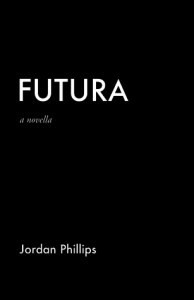
Review: Futura by Jordan Phillips

futuraFutura by Jordan Phillips

My Rating: 1.5/5 TARDISes

Series: Standalone

Date Published: January 2nd, 2018

Publisher: CreateSpace Independent Publishing Platform

Pages: 72 pages

Source: Publisher

Links: Goodreads | Amazon

Synopsis: By the year 2050, Paris is a stark contrast from other large cities, which had long ago morphed into ultramodern metropolises, where every new building was practically a city within a city. Even in France, humans cannot escape the fact that the Invisibles have taken over. Some come in the form of microscopic chips that are embedded practically everywhere, while others are more visible because they power robots. Humans were suddenly underutilized, and they would be forever.

Past futurists had cried that this would be disorienting and depressing, but it turned out to be quite liberating. Human qualities—good and bad—are tolerated because they are authentic, and not artificially created. To err is to be human, and these days, to be human is to be beautiful. 

Futura follows a single American woman named Ruby as she figures out how to thrive in a dramatically different cultural landscape. This utopian novella pushes back on the cynical views many hold today. Instead, author Jordan Phillips has imagined a bright future for the entire human race.

____________________________________________________________

*I received a copy of this book from the publisher in exchange for an honest review*

This is a spoiler-free review.

I had a rather complex experience with this particular novella. First of all, the actual e-book edition that I received was very messed up and extremely hard to comprehend—the paragraphs were not at all in order. A few paragraphs would fit together, but all of a sudden, the last sentence would stop in the middle, and the next paragraph would be a completely different part of the story. Then, later on, I would find the continuation of those previously unfinished paragraphs mixed in with an entirely new part of the plot. Understandably, this was quite confusing and very difficult to follow since I had to piece together random parts until I had the whole story.

Keeping that in mind, I will try to summarize and review this novella as well as I can. This story takes place in Paris, starting during the year 2050. Society has completely evolved into a highly futuristic, technology-ruled world where artificial intelligence is in charge of most of the goings on from day to day. With the “Invisibles” running things, humans have become very underutilized—but this might not be an entirely awful thing. Instead of the typical pessimistic view of a future run by computers, this novella paints a picture of a world in which people have ample time to spend their lives doing whatever they love.

Every last aspect of the world and its economy is run so flawlessly that everyone is taken care of whether they are employed or not. And employment is simply a choice, not a necessity. Amid all the modernizations, major technological advances, and the microchips that hide everywhere, smoothly running the world, lies a surprisingly utopic human existence. They have enormous amounts of free time, but never lack something to do. Being human is seen as being utterly beautiful—every human quality is accepted. Against all odds, this future is incredibly bright.

It’s been very tricky getting my thoughts straight about this novella. The one thing that I can say is that Jordan Phillips is definitely a talented writer. She did a wonderful job of building the world, using vivid details to capture just how technology takes the pressure off humans without rendering them pointless—without erasing everything that we need to build a life. This is a unique take on life in the future, seemingly far removed from the many horror stories featuring the elimination of our existence. Every element of the plot showed her creativity and inventiveness, and her writing itself was very easy to understand.

Excluding the incomprehensibility due to the formatting of the actual e-book itself, I’m not sure how I feel about the story as a whole. I enjoyed imagining this vision of the future and thinking about all of Phillips’ genre-bending ideas. However, I was left wondering if this was actually as much of a utopian society as it claims to be.

In a world like this, people are much more trapped—things run smoothly so no one steps outside the boundaries or looks to shake things up. It could be looked at as a comfortable and free existence, but would we really be free if we handed absolutely everything over to systems of artificial intelligence? I’m not sure if this story is intentionally posing that question or if I am just overthinking things.

We do loosely follow various characters throughout this story, particularly an American woman named Ruby. She is a single woman looking for love and feeling a strong urge to have a child. It is hard to connect with Ruby, or any of the other characters for that matter, since we spend such a short time with them, and there really is not much in the way of character development happening. I originally liked Ruby, but by the end she was starting to get on my nerves.

About halfway through, she begins making some absolutely terrible decisions, mainly due to the fact that she is so fixated on having a baby. Many of her friends have children, and she sees this as one of the biggest pieces missing from her life. This is understandable—as I’m sure many people feel that way at some point—but Ruby is way too over-the-top about it.

By the end, Ruby makes what I feel is a completely inexcusable choice. It was a bit hard for me to connect with her in the beginning, but she had definitely lost me completely by the end. Along with this, it just seemed like everyone had an outrageously cynical and unhealthy view of many of the important and uniquely human parts of our existence.

So, overall, I got the message that this utopian society was in fact still in the same vein as many of the post-apocalyptic or negative depictions of the future; it just didn’t feel like that much changed for the better. Comparatively, it is better in some aspects, but it is also wholly stifling and still utterly dependent on technology—much more so than today. Again, I’m not sure if this is the intended view the reader is supposed to have or if it’s just how the story came across to me.

In the end, I think this story was unique and well-written, but it simply fell a bit flat for me. This wasn’t really my cup of tea, but it is a quick read and I definitely still recommend giving it a try.

1.5 TARDISes

logo2