Review: Cinder by Marissa Meyer

cinderCinder by Marissa Meyer

My Rating: 5/5 TARDISes

Series: The Lunar Chronicles #1

Date Published: January 3rd 2012

Publisher: Feiwel & Friends

Pages: 390 pages

Source: Purchased

Links: Goodreads | Amazon | Book Depository

Synopsis: Humans and androids crowd the raucous streets of New Beijing. A deadly plague ravages the population. From space, a ruthless lunar people watch, waiting to make their move. No one knows that Earth’s fate hinges on one girl.

Cinder, a gifted mechanic, is a cyborg. She’s a second-class citizen with a mysterious past, reviled by her stepmother and blamed for her stepsister’s illness. But when her life becomes intertwined with the handsome Prince Kai’s, she suddenly finds herself at the center of an intergalactic struggle, and a forbidden attraction. Caught between duty and freedom, loyalty and betrayal, she must uncover secrets about her past in order to protect her world’s future.

____________________________________________________________________

This is a spoiler-free review.

Cinder is the first novel in The Lunar Chronicles, a series of four novels, each loosely based on a classic fairytale. This story introduces us to the main character of the series, a talented cyborg mechanic by the name of Linh Cinder, as well as to the setting of New Beijing. Orphaned after an accident, she lives with her stepmother and two stepsisters. Despised by her stepmother Adri and stepsister Pearl, Cinder leads a life of servitude, working constantly both at home and at her repair stall in the market, and finding friendship only in her youngest stepsister Peony and an old android named Iko, whom she has repaired. However, Cinder’s life changes dramatically one day as she begins to play a key role in the government’s fight against the deadly plague that is overtaking New Beijing.

I am a massive fan of reading any sort of retelling, particularly fairytale retellings; I have found myself tending to gravitate toward them a lot over the years. However, I am always quite wary of these types of novels, especially with the sizeable upsurge of them in young adult literature recently. A reimagining of a classic tale is tricky to perfect, and while you do not want an exact copy of the original, you also do not want a retelling straying too far or going wild with strange twists and concepts that detract from the main message. An intense amount of hype surrounding a book is another factor that sometimes can make me cautious or put me off a novel. Cinder, I am very pleased to say, not only lands perfectly in that area of unique yet still faithful to the original fairytale, but also completely lives up to the hype.

Cinderella is one of my favorite stories to read retellings of. I do find that it can be difficult to reinterpret in a unique yet solid way, and it definitely tends to be either a major hit or huge miss. The plot that Meyer created for this novel, however, was spot on. She skillfully weaves sci-fi elements into this already established and well-known narrative, creating not only a work that pays homage to a timeless tale but also ends up being a very singular story in itself, and it is distinctively her own.

While this was not one of the more unpredictable novels I’ve ever read in terms of having a plethora of twists and turns that keep you guessing, it was still a remarkably enthralling read. I found myself deducing many of the plot points well before they happened, and yet I never once lost interest; I never once disconnected myself from the story.

Predictability is something that I have learned to expect from retellings, but the key piece to watch out for in a novel such as this is how the author makes up for that. Meyer does it right, and draws the reader in with every single aspect of the story. Though the plot twists are rather foreseeable fairly early on, the book remains deeply engaging until the final page.

Marissa Meyer’s writing itself was absolutely stellar. It flowed beautifully and was very easy to get into. This novel is packed with incredibly vivid descriptions and well-developed settings. I had a clear image of New Beijing in my mind the entire time I was making my way through this novel. She further brings this setting to life by creating a very realistic image of a people affect by and living in terror due to deadly illness beyond their control. The fear and paranoia was constantly palpable and allowed me to become serious immersed in this world.

On top of quality writing, and rich description and world building, another element of the novel that makes it such an engaging read is the all-star cast of characters that Meyer has created. The good characters are very easy to connect with and love, and the villains are exceedingly despicable. Cinder, in particular, stands out as an excellent protagonist; once I started reading, I very promptly connected with her and began to care about her and her story.

It is immensely intriguing and many times heartbreaking to see the story of this young cyborg girl in a world that discriminates against cyborgs. This ended up giving the story a great amount of depth and made it far more thought provoking than I had expected going into it. I completely fell in love with Cinder from page one, and this kept me on the edge of my seat, wanting to see how everything panned out for her. She is shaping up to be a strong, independent heroine and I am eager to see how she further evolves as the stories progress.

I loved the portrayal of Cinder’s friendships with Peony and Iko. Peony is an absolutely beautiful and loveable character, and I enjoyed seeing the relationship between the two of them. Iko is just fantastic and easily one of my favorite characters in the entire novel. These relationships were a perfect contrast to the difficult life that Cinder generally leads and the horrible treatment that she regularly receives.

And then there is Prince Kai. This is by far one of the best romances in a young adult novel in my recent experiences, primarily because it is not a huge, overpowering aspect of the plot. It is rather subtle and there is absolutely no insta-love. It is a much slower and realistic progression, and is something that will continue to evolve and grow throughout the series instead of all in one book. Kai is a lovely character and superb love interest, but I also appreciate the fact that Cinder has her priorities straight and remains independent.

Though we only get a relatively brief glimpse of her as a character, Queen Levana is already proving to be an utterly detestable villain. We also get to see that Levana is going to be quite a multi-dimensional villain as well, and not just someone who is in the plot simply to be antagonistic and create drama or tension. I will be interested to learn more of her backstory in future novels.

Cinder is a novel that has been on my radar for quite a while, and I am extremely glad that I finally picked it up. This is by far one of the most unique and intriguing stories that I have read in recent years, and I was immediately hooked once I began it. I very highly recommend it to everyone, particularly if you are like me and enjoy both sci-fi and retellings, because this is a spectacular mash-up of both. Not only have I already completely fallen in love with this series, but I have also become a huge fan of Marissa Meyer’s writing. I truly look forward to reading the rest of this series as well as any of her future works.


5.0 TARDISes

logo2

Review: The Memoirs of Sherlock Holmes by Sir Arthur Conan Doyle

thememoirsofsherlockholmesThe Memoirs of Sherlock Holmes by Sir Arthur Conan Doyle

My Rating: 5/5 TARDISes

Series: Sherlock Holmes #4

Date Published: July 24th, 2012 (first published in 1894)

Publisher: BBC Books

Pages: 340 pages

Source: Purchased

Links: Goodreads | Amazon | Book Depository

The Memoirs of Sherlock Holmes is the second collection of short stories Arthur Conan Doyle wrote chronicling the various cases that Sherlock Holmes works on accompanied by Dr. John Watson, the narrator of the tales. Originally, there were twelve stories that were each individually published in The Strand Magazine prior to being released together as a whole novel in 1894. However, for unclear reasons, only eleven of these stories were put into the first London edition and subsequent U.S. editions of this collection. The omitted story was later published in the fourth collection of short stories, His Last Bow.

Arthur Conan Doyle creates literary magic once again, continuing the adventures of his great detective. I was equally as absorbed by these new mysteries as I was by those in the previous novel. I found myself falling in love all over again with these iconic characters and Doyle’s extraordinary storytelling style. There were more surprising twists and turns, and each case kept me on my toes in the way I so enjoy.

This is the collection that contains some of the most iconic stories and characters of the Sherlock Holmes series, including Holmes’s brother, Mycroft. We also finally see him face off against his arch-nemesis, Professor Moriarty, arguably one of the most famous characters from the novels.

Not only do we get new cases, but we are also given a glimpse into Holmes’s past. We see how he got his start, how he became the master of deduction. We are also treated to what I felt was a more thorough depiction of Holmes’s more human side; no matter how astounding he is, Doyle never lets us lose sight of that aspect of his character.

Doyle goes more in-depth in his intriguing juxtaposing of Holmes and Watson, further demonstrating Holmes’s remarkable abilities while allowing the highly intelligent doctor to hold his own. I felt there was even more of an equal display of their individual talents throughout these stories than in the first collection. Watson is given many an opportunity to show off his invaluable medical skills during a number of cases.

I loved every story in this novel, though I did feel like my opinions of each of them were a bit more varied than my opinions of the stories in the collection preceding this. There were a few stories that did not resonate with me quite as much as others. Despite this, the stories were overall enjoyable and enthralling, and I devoured them as enthusiastically as ever. This was a spectacular read and a welcome new addition to my list of all-time favorite novels.

I’ll very briefly go more in-depth with a summary of each of the individual stories in the collection. Note: These are spoiler-free descriptions.

My favorite stories from this collection were Silver Blaze, The Adventure of the Yellow Face, The Final Problem, The Adventure of the Resident Patient, and The Adventure of the Greek Interpreter.

  1. Silver Blaze

In this story, Holmes is called in to investigate the disappearance of a famously talented racehorse right before an important race, as well as the coinciding murder of the horse’s trainer. I was completely absorbed in this horse’s tale, and loved the many bewildering events in and layers of the storyline; like many of the tales, it was not at all a straightforward plot. In my opinion, there was also a particularly good depiction of both Holmes’s and Watson’s individual talents. Silver Blaze was by far my favorite story in this particular collection.

  1. The Adventure of the Yellow Face

In this case, a man hires Holmes to discover, by any means necessary, why his wife keeps secretly and frequently visiting a nearby cottage. I enjoyed this because I found the themes that it dealt with to be uncharacteristic of the stories thus far and, delightfully, dealt with in a very open-minded way that was surprising for the time period this was published in. This was another one of my favorites; it was quite a unique story and had a very touching ending. It is also one of the few cases that Holmes does not solve correctly, and contains one of my favorite quotes: “Watson, if it should ever strike you that I am getting a little overconfident in my powers, or giving less pains to a case than it deserves, kindly whisper ‘Norbury’ in my ear, and I shall be infinitely obliged to you.”

  1. The Adventure of the Stockbroker’s Clerk

In The Adventure of the Stockbroker’s Clerk, a young man by the name of Hall Pycroft comes to Holmes about a suspiciously well-paying job that he has just been offered. He had recently gotten a good job as a clerk with a company in London, after having lost his previous job at another stockbroker’s, when a man named Arthur Pinner approached him about yet another job. This job was a position at a hardware company and had nothing to do with stockbroking; it was a much better offer so he had quickly taken it. However, things soon started to feel off about this new position when Pinner asked that Pycroft not resign from the other job.

  1. The Adventure of the Gloria Scott

This story breaks from the traditional format, as Holmes takes over as narrator and relates this tale of his past to Watson. Holmes tells Watson about one of the first cases he ever worked on: helping out a friend from university, Victor Trevor, whose father received a seemingly insignificant letter that induced a stroke. I was very torn in my feelings about this story. I felt as though this was one of the weaker ones, and the actual mystery itself fell a bit flat for me. However, this story also shows Holmes in his early years, when he was only just becoming the incredible detective we all know him to be. It is one of the first looks we get into his past, and we are shown a new and fascinating side of him in his interactions with his schoolmate.

  1. The Adventure of the Musgrave Ritual

This is another story where Holmes takes over as narrator and recounts one of his earliest cases to Watson. After going into business as a consulting detective, he receives a visit from Reginald Musgrave, a university acquaintance. Musgrave has come to him after two members of his staff, the maid and the butler, have gone missing. He had recently fired the butler after catching him reading a centuries old family document, the Musgrave Ritual. Musgrave gave the butler a week to leave, but he disappeared after a few days, leaving behind all of his belongings. The maid was found to be hysterical over the disappearance, and she herself suddenly went missing only nights later.

  1. The Adventure of the Reigate Squire

In this story, Holmes has just finished up with a rather stressful case and Watson, worried for his health, takes him to a friend’s estate for a rest. However, when they arrive, Holmes finds out that his detective skills are needed there. A burglary has recently occurred at the Acton estate nearby, where the thieves only took a very random assortment of items that were not very valuable. Then, a few mornings after they arrive, Holmes and Watson are informed of a second burglary at the Cunninghams’, yet another nearby estate; however, this time, the coachman at the estate has been murdered. The only physical clue found in the murder case is a small piece of paper in the man’s hand with a few mysterious words written on it. This was one of my favorite cases that Holmes worked on in this collection, and also contains what I thought was one of the most hilarious scenes that I have read in these stories so far.

  1. The Adventure of the Crooked Man

In this case, Holmes visits Watson’s practice and asks if he would like to join him in the final stage of his investigation. Holmes has been investigating the apparent murder of Colonel James Barclay. His wife Nancy is the prime suspect, though acquaintances said that they appeared to have a happy marriage. However, on the night of his death, the servants heard the couple have a terrible argument, during which Nancy called her husband by a different name. Everything suddenly went quiet and the servants were unable to gain access to the locked room. When they finally did, James Barclay lay dead and his wife remained passed out nearby, having supposedly used the Colonel’s club to commit the crime. Of course, there is much more to this case than meets the eye, as Holmes soon finds out.

  1. The Adventure of the Resident Patient

In The Adventure of the Resident Patient, Holmes is approached by Dr. Percy Trevelyan, who has found himself in a rather unusual working situation. Though he had done well in medical school, Trevelyan did not come from a wealthy background and therefore had been unable to begin a practice for himself; however, he had eventually been contacted by a benefactor by the name of Blessington, who gave him the money he needed in order to build this practice. The two men had worked out a deal where Blessington would receive three-quarters of the practice’s daily profits and, suffering from various illnesses himself, would become Trevelyan’s resident patient. Things worked out well until a week before Trevelyan comes to Holmes, when Blessington had become increasingly nervous about the security at the practice. Then two men had come to be treated by Trevelyan, and it later appeared that one of them had searched through Blessington’s room. This mystery was absolutely fascinating and was another one of my personal favorite cases in this collection.

  1. The Adventure of the Greek Interpreter

This is the first story that introduces us to Holmes’s brother, Mycroft. He not only has the same deductive and observational powers as Holmes himself but also, as Holmes states, Mycroft surpasses him in these areas. Mycroft presents him with the case of a Greek interpreter named Mr. Melas. Melas was visited one night by a man who needed his translation abilities for a business matter. This man took Melas to the location of the transaction in a coach with blacked out windows to prevent him from knowing where they were headed. The man also produced a weapon that he held by his side and told Melas that if he let anyone know of the events of this evening, he would be dealt with. When they arrive at their destination, he was brought into a house to speak with a man who, having a taped over mouth, was forced to write down his responses. A young woman who appeared to know this man interrupted their meeting and, as the two were being separated, Melas was rushed back out of the house and into the carriage. This was a very unique and intriguing case, and this story ended up being another one of my favorites from the collection.

  1. The Adventure of the Naval Treaty

In this story, Watson brings Holmes a case that an old classmate of his, Percy Phelps, has just written him about. Phelps has been suffering from a “brain fever” for a number of weeks following an incident at his workplace involving a document of international importance. He was given the task of copying this top-secret naval treaty, a task which caused him to have to stay quite late at the office one evening in order to finish. Phelps had rung for coffee from the commissioner at the office, but when it did not turn up, he went looking for him. At the same time as he found the commissioner asleep at his desk, Phelps heard the bell that indicated that someone was ringing from his office. He rushed back upstairs to find that the room was empty and the naval treaty was missing.

  1. The Final Problem

This is the first story to introduce another iconic character: Holmes’s arch-nemesis, Professor Moriarty. It is also the first story to make me cry. A criminal mastermind with an intellect on par with his own, Moriarty was Holmes’s greatest adversary. The pair matches wits as Holmes attempts to bring him and his organization to justice, but neither can best the other. This causes a stalemate, which ends in the famed fight at the Reichenbach Falls. The Final Problem was definitely one of my favorites from this collection. It is one of the most well known Sherlock Holmes stories so, going in, I was prepared for the concluding events. However, I must admit, those final couple of pages still made me tear up.

5.0 TARDISes

logo2

Review: Doctor Who: The Blood Cell by James Goss

thebloodcellDoctor Who: The Blood Cell by James Goss

My Rating: 1.5/5 TARDISes

Series: Doctor Who: New Series Adventures #58

Date Published: September 9th, 2014

Publisher: Broadway Books

Pages: 256 pages

Source: Library

Links: Goodreads | Amazon | Book Depository

Synopsis: “Release the Doctor — or the killing will start.”

An asteroid in the furthest reaches of space – the most secure prison for the most dangerous of criminals. The Governor is responsible for the worst fraudsters and the cruelest murderers. So he’s certainly not impressed by the arrival of the man they’re calling the most dangerous criminal in the quadrant. Or, as he prefers to be known, the Doctor. 

What does impress the Governor is the way the new prisoner immediately sets about trying to escape. And keeps trying. Finally, he sends for the Doctor and asks him why? But the answer surprises even the Governor. And then there’s the threat — unless the Governor listens to the Doctor, a lot of people will die.

Who is the Doctor and what’s he really doing here? Why does he want to help the Governor? And who is the young woman who comes every day to visit him, only to be turned away by the guards? 

When the killing finally starts, the Governor begins to get his answers…

____________________________________________________________________

This is a spoiler-free review.

I have been a fan of this Doctor Who book series for a couple of years now, and the show itself even longer, and have found these books to be very entertaining. Even though they aren’t exactly the best literature ever, they are fun to read and feel a bit like extra episodes of the show. I have really been enjoying Peter Capaldi’s performance as the Doctor and Jenna Coleman as Clara, so I was very eager to begin the books starring this incarnation of the loveable time lord and his clever companion. However, I did not exactly get what I was looking for out of this novel.

The idea for the plot sounded very intriguing, but the execution of it caused it to fall a bit flat for me. The main reason I did not enjoy this book as much as I had hoped was due to the first person narration. Typically, these novels are written from a third person perspective. I think these stories generally work out a lot better with that type of narration because the actions of multiple characters, most importantly the Doctor and companion, can be followed more closely. The insight that a third person perspective gives you as a reader keeps the story moving at a better pace. It is also more interesting, as most readers likely want to actually see the Doctor’s actions play out rather than hear those escapades relayed back to them by an observer.

I also personally found myself not connecting at all with the Governor and not caring much for or about him as a character, which made the first person narration even more of a problem. It got to the point where I did not really care what was happening to him or what he thought; I just wanted to see what the Doctor was up to, how he was handling things. The main point of reading these stories is to see more of the Doctor’s and companion’s adventures and antics, and that was completely lost in this novel.

The setting of the prison and overall concept for the story was a good one and could have easily been a great plot for an episode. In the little that we get to see of them, I thought that the author did a fairly good job portraying Capaldi’s Doctor and Clara. At times, I did enjoy the mystery of why the Doctor was in the prison, and I was definitely intrigued to see how he and Clara would escape from this situation.

Overall, this was not a terrible book by any means, but it was definitely not one of my favorite Doctor Who books. With a few alterations, this could have been so much better than it was. Occasionally I felt that some of this story became slightly repetitive and dragged on a bit without making much progress or uncovering new details. Basically, it seemed like there was a lot of action but they weren’t really getting anywhere. The main details that were finally revealed in the end were somewhat interesting, but they definitely didn’t blow me away; and I can’t say that the reveal made me feel like it was worth getting through the rest of it.

1.5 TARDISes

logo2

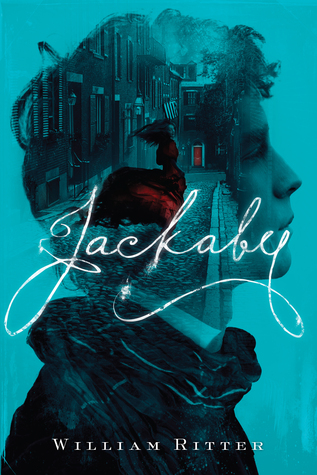
Review: Jackaby by William Ritter

jackabyJackaby by William Ritter

My Rating: 4.5/5 TARDISes

Series: Jackaby #1

Date Published: September 16th, 2014

Publisher: Algonquin Young Readers

Pages: 299 pages

Source: Purchased

Links: Goodreads | Amazon | Book Depository

Synopsis: “Miss Rook, I am not an occultist,” Jackaby said. “I have a gift that allows me to see truth where others see the illusion–and there are many illusions. All the world’s a stage, as they say, and I seem to have the only seat in the house with a view behind the curtain.”

Newly arrived in New Fiddleham, New England, 1892, and in need of a job, Abigail Rook meets R. F. Jackaby, an investigator of the unexplained with a keen eye for the extraordinary–including the ability to see supernatural beings. Abigail has a gift for noticing ordinary but important details, which makes her perfect for the position of Jackaby’s assistant. On her first day, Abigail finds herself in the midst of a thrilling case: A serial killer is on the loose. The police are convinced it’s an ordinary villain, but Jackaby is certain it’s a nonhuman creature, whose existence the police–with the exception of a handsome young detective named Charlie Cane–deny.

Doctor Who meets Sherlock in William Ritter’s debut novel, which features a detective of the paranormal as seen through the eyes of his adventurous and intelligent assistant in a tale brimming with cheeky humor and a dose of the macabre.

____________________________________________________________________

This is a spoiler-free review.

Between the intriguing synopsis and the beautiful cover art, this novel caught my eye right away. I was very eager to dive into it, and it did not disappoint. Jackaby is an incredibly entertaining and hilarious ride that captivated me right from the start and held me until the final page. This book is pitched as being “Doctor Who meets Sherlock” and it quite is reminiscent of both while never feeling copycat. Ritter uses general, well-loved aspects of these two stories to build his own, truly unique and cleverly written tale.

The story focuses on an eccentric detective named Jackaby, and is told from the point of view of his bright, young assistant, Abigail Rook. Abigail has run away from her family and, having just arrived in America, is looking for work. Answering his advertisement, she finds herself working for the highly intelligent and incredibly eccentric Jackaby, and subsequently is plunged into the world of crime. These are not simply ordinary crimes however, but crimes committed by supernatural beings that most people, herself included, cannot see.

Jackaby is an unusual sort of detective, and a very peculiar character. I found him to be very much a mixture of Sherlock Holmes and the Eleventh Doctor. He has the intellect and the unbelievably acute powers of observation that Arthur Conan Doyle’s great detective has, mixed with the quirky nature of the beloved time traveling hero. Jackaby works as a detective, like Holmes, but in the world of the supernatural, like the Doctor. He resembles each person in different ways, which, when put together, adds up to a very singular character.

I thought Abigail was sort of a John Watson, Clara Oswald hybrid. She is a highly intelligent person herself, as well as a strong female lead who holds her own alongside the detective. The fact that Abigail is the narrator of the story, recounting her experiences with Jackaby, gives it the same quality of the original Sherlock Holmes novels. She is also the person who deals with the more human aspects of the cases, something with which Jackaby tends to struggle on his own. Overall, she is a clever, brave, and spunky character, and makes up the second half of a marvelous pairing.

While the two of them had qualities that reminded me of these other characters, they still felt like purely original creations. Ritter constructs them in a way where he uses familiar qualities audiences have come to love as a template to form entirely new people with distinct personas.

For the most part, I found the writing in this novel to be spot on. Ritter does a wonderful job of evoking a dark yet humorous tone and building the 19th century New England town in which the novel is set. The dialogue is sharp, witty, at times sarcastic, and appropriately fast-paced. All of the characters, both human and supernatural, in this novel are very compelling, meticulously created, and skillfully portrayed. Ritter invents two fully developed and vibrant worlds. One is realistic and one is much more mystical and filled with vividly depicted creatures, and they both intertwine fluidly.

The plot itself was a relatively typical murder mystery, made complex with its elements of fantasy and science fiction. I will admit, I did figure out who the culprit was well before the end of the novel, however, this did not detract at all from my enjoyment of it. And there were still a satisfying amount of twists and surprises in other aspects of the story, such as the fantastical elements, that caused enough of a feeling of wonder to create an engrossing narrative.

This novel is by no means perfect, and I definitely believe that it is sort of a hit or miss type of story. But it is such an incredibly fun tale and personally, I couldn’t help but love every minute of reading it. I adored being in this world, particularly Jackaby’s world of bizarre creatures. Ritter draws inspiration from some very widely loved characters and uses this to create new and equally lovable ones. He retains a solid amount of individuality while conjuring up the same feelings that these other timeless tales do for their admirers. For me, this truly was an enchanting read. I am looking forward to seeing how this series progresses in the future books.

I very highly recommend giving this book a try. And remember: “DO NOT STARE AT THE FROG!”

4.5 TARDISes

logo2

Review: Red Queen by Victoria Aveyard

redqueenRed Queen by Victoria Aveyard

My Rating: 2/5 TARDISes

Series: Red Queen #1

Date Published: February 10th, 2015

Publisher: HarperTeen

Pages: 383 pages

Source: Library

Links: Goodreads | Amazon | Book Depository

Synopsis: This is a world divided by blood – red or silver.

The Reds are commoners, ruled by a Silver elite in possession of god-like superpowers. And to Mare Barrow, a seventeen-year-old Red girl from the poverty-stricken Stilts, it seems like nothing will ever change.

That is, until she finds herself working in the Silver Palace. Here, surrounded by the people she hates the most, Mare discovers that, despite her red blood, she possesses a deadly power of her own. One that threatens to destroy the balance of power.

Fearful of Mare’s potential, the Silvers hide her in plain view, declaring her a long-lost Silver princess, now engaged to a Silver prince. Despite knowing that one misstep would mean her death, Mare works silently to help the Red Guard, a militant resistance group, and bring down the Silver regime.

But this is a world of betrayal and lies, and Mare has entered a dangerous dance – Reds against Silvers, prince against prince, and Mare against her own heart…

____________________________________________________________________

This is a spoiler-free review.

This book was very difficult for me to rate. I had a bit of a love-hate relationship with it; there were many problems, but also a few aspects that I thought were fantastic. I am always reluctant when it comes to books that have a lot of hype surrounding them, but I decided to take a bit of a risk with Red Queen due to the many positive reviews it has been receiving.

Lately, I have been reading a lot less of this type of novel, as I am finding that it does not appeal to me as much as it did a few years back. I believe this is due not only to the fact that I am now outside the target age range, but also to the repetitive nature of many of the storylines. While I am perfectly fine with some similarities between books and I understand that it is bound to happen, there tends to be a lot of overused tropes in the young adult dystopian genre these days, and I am not a fan of many of them.

In my opinion, the plot of Red Queen started out very promising and pulled me in right away. Aveyard does a wonderful job of conjuring up a vision of the world and showing the stark contrast between the living situations of the Reds and the Silvers. She also clearly shows the social divide and the unfair and inhumane treatment of the Reds. The concept of the Silvers is fascinating; the idea of their powers is enthralling, and I truly enjoyed all the scenes where these powers were demonstrated. I do wish that there had been a bit more of a focus on those abilities and the history of the Silvers, but I am hoping this will be shown in more depth in the future books.

While the setting and concept of the novel are both fairly strong, the actual plotline does not do either of them justice. There is a world of people where the color of their blood determines their lot in life. A world of disunion and unrest, and a rebellion springing up to work toward gaining proper rights for the downtrodden. A world entirely human, but ruled by those with superhuman abilities, acting as merciless gods. There is so much to be explored, and yet the main focus is not on any of these topics. Instead of focusing on the structure of the society or the political intrigue and deception, there is far too much emphasis put on more trivial matters. I believe this is primarily due to the fact that it is written using first person narration.

I genuinely believe that I would have liked this book a lot more if it had been told in third person. One of the main reasons that I had trouble connecting with the story was due to the fact that I only liked a handful of the characters, many of whom did not play large roles in the plot. Most importantly, I did not like the main character, Mare.

I frequently found myself becoming irritated with the things she did, such as the way she treated other people and how she handles the situation she is in. She seemed to lack sympathy for others, even her own family members, and tended to always put herself first. Mare does occasionally worry about the safety of her family, but it never feels truly genuine because she spends much of her time feeling sorry for herself.

She has been thrust into a difficult and very dangerous situation, essentially becoming a pawn to the Silvers, and has every reason to feel discouraged. However, Mare unfortunately lacks the maturity that makes a strong heroine, and spends far too much time indulging in self-pity. It is nice to see a character overcome some of those negative thoughts and forge ahead to protect themselves and their family, and I did not think that there was enough of this demonstrated here. I do hope to see her character mature and strengthen as the series progresses.

There is also too much focus on romance, specifically one that is rather weak, and a bully, both of which seem as if they have been forced into the plot. This novel does involve a bit of a love triangle, something that I tend to not be a huge fan of. However, Mare’s main love interest is Prince Cal. While I did like Cal as a character, I felt that their romance was a bit rushed and did not feel as if it was happening naturally. Likewise, I also felt that the antagonistic relationship between Mare and the bully character, Evangeline, was too suddenly intense, and that Evangeline was a very cliché “mean girl”. Both of these storylines ended up being very formulaic and therefore did not capture my attention.

Between her self-centered attitude and her fixation on Cal, I quickly became tired of being in Mare’s head and hearing her thoughts. I frequently wished that I could pull away from things slightly and observe this story playing out from a third person perspective. Though it had the potential to be a very complex and unique plot, it falls victim to many clichéd tropes and loses a lot of possible seriousness and maturity. It ends up becoming more of a sophomoric story that focuses too heavily on things like mean girls and love triangles.

While I disliked the above aspects, there was one main part of the narrative that I completely loved: the writing style. When reading about Victoria Aveyard, I learned that she has a degree in screenwriting, and her talent in that area comes through very clearly in her writing. Aveyard’s descriptions are vivid, captivating, and absolutely spot-on. The entire way through the novel, I could clearly see everything playing out in my mind, and she built a fascinating world. One recurring thought I had was about what a good movie this would make and, in fact, I think this may have come across better in a cinematic format. Her writing flows beautifully, and that is what truly carried me through the novel.

Overall, I would have to say that I was not a fan of this novel. However, I am extremely interested in reading more of Victoria Aveyard’s writing, and for that reason, I think that I may give the sequel, The Glass Sword, a try. Since first books in series tend to have a lot of set up for future stories, I would be intrigued to see if I have a more enjoyable time with the next part. I would also like to see if Mare matures and becomes a stronger heroine. I am still glad that I gave it a try, and would also recommend giving it a go if you have been debating whether or not to. It did not click with me and I think it is a hit or miss kind of story, but I can definitely see why this novel has gotten many glowing reviews.

2.0 TARDISes

logo2

Review: Gone Girl by Gillian Flynn

gonegirlGone Girl by Gillian Flynn

My Rating: 5/5 TARDISes

Series: Standalone

Date Published: June 5th, 2012

Publisher: Crown Publishers

Pages: 419 pages

Source: Purchased

Links: Goodreads | Amazon | Book Depository

Synopsis: On a warm summer morning in North Carthage, Missouri, it is Nick and Amy Dunne’s fifth wedding anniversary. Presents are being wrapped and reservations are being made when Nick’s clever and beautiful wife disappears from their rented McMansion on the Mississippi River. Husband-of-the-Year Nick isn’t doing himself any favors with cringe-worthy daydreams about the slope and shape of his wife’s head, but passages from Amy’s diary reveal the alpha-girl perfectionist could have put anyone dangerously on edge. Under mounting pressure from the police and the media–as well as Amy’s fiercely doting parents–the town golden boy parades an endless series of lies, deceits, and inappropriate behavior. Nick is oddly evasive, and he’s definitely bitter–but is he really a killer?

As the cops close in, every couple in town is soon wondering how well they know the one that they love. With his twin sister, Margo, at his side, Nick stands by his innocence. Trouble is, if Nick didn’t do it, where is that beautiful wife? And what was in that silvery gift box hidden in the back of her bedroom closet?

____________________________________________________________________

This is a spoiler-free review.

Gone Girl is an incredibly well crafted, captivating mystery. With an ingenious plot and many intriguing characters, Gillian Flynn creates a fantastically twisted and unpredictable novel. As I am finding, it is an extremely hard book to review without spoilers, though I am giving it my best shot. I am a huge fan of crime and mystery novels, so I knew going in that this would be an enjoyable read for me; however, I did not expect to love it quite as much as I did. I ended up absolutely adoring every aspect of this book, and just this one novel has already made me a major Gillian Flynn fan.

Though this is a fantastic read no matter what, going into this novel knowing next to nothing about the story would be the best way to go about it. Flynn has skillfully constructed an exceedingly complex plot, with an astonishing amount of layers that unfold slowly as it progresses. There are so many different threads, going off in all directions, which are brought back together in the end and connected to each other. I was amazed by how carefully created the storyline was; how even the smallest elements addressed early in the novel had played a significant role by the end. As a writer myself, I truly admire the amount of cleverness and expert planning that must have gone into the assembling of this narrative.

In my opinion, one of the most impressive aspects of this novel is how frighteningly realistic everything is. The scenarios are outrageous, but they never get to the point of being unbelievable; they are unlikely, uncommon, but humanly possible.

Gone Girl is also full of vivid characters that add further dimension to the plot, many times due to their unreliability. Almost all of the characters that are central to the telling of the story have their own secrets that they are keeping from each other, as well as the reader. We are typically trained to trust the narrator in the stories that we read, but in this novel, it quickly becomes clear that this is not something that can be done.

This is not a story of good versus evil. All of the characters have their faults; all of them are in the wrong in some way or another. No one person is entirely likeable or worthy of full sympathy, and that is what ends up making all of them so enjoyable and interesting. They add further mystery and intrigue to the narrative, and their lack of truthfulness keeps the reader on their toes, wondering whether or not to trust.

Tying in with what I said earlier about realism in the plot, these characters do outrageous things to each other and to hide incriminating facts, however they are extremely believable. It never reaches a point where you are questioning their ability to pull off what they do. You may wonder how people could do such things; how they could get to the point where they feel they need to behave this way. But nothing is ever an unrealistic feat, and recognizing this makes the overall story even more unnerving.

And now we come to my absolute favorite part about this novel: the writing style. I completely fell in love with Flynn’s writing style and felt that it carried me seamlessly through the novel. She does a fantastic job of setting the tone, and her words flow consistently well throughout. She captures the voices of her characters perfectly, and paints a very sharp and chilling picture.

Suffice it to say, I loved this book and very highly recommend giving it a try. This is by far one of the most well-written and expertly plotted novels that I have ever read. It was a fast-paced, disturbing, and startling read, that had me completely captivated from page one. It takes a lot of skill to construct something like this, and I am incredibly impressed by her talent as a writer. Gillian Flynn has created a masterpiece.

5.0 TARDISes

logo2

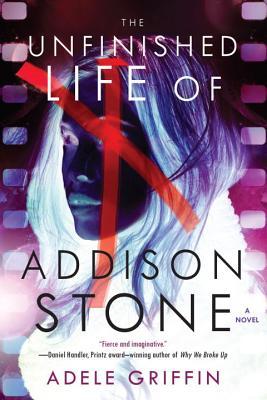
Review: The Unfinished Life of Addison Stone by Adele Griffin

addisonstoneThe Unfinished Life of Addison Stone by Adele Griffin

My Rating: 1/5 TARDISes

Series: Standalone

Date Published: August 12th, 2014

Publisher: Soho Teen

Pages: 256 pages

Source: Library

Links: Goodreads | Amazon | The Book Depository

Synopsis: National Book Award-finalist Adele Griffin tells the fully illustrated story of a brilliant young artist, her mysterious death, and the fandom that won’t let her go.

From the moment she stepped foot in NYC, Addison Stone’s subversive street art made her someone to watch, and her violent drowning left her fans and critics craving to know more. I conducted interviews with those who knew her best—including close friends, family, teachers, mentors, art dealers, boyfriends, and critics—and retraced the tumultuous path of Addison’s life. I hope I can shed new light on what really happened the night of July 28. —Adele Griffin

____________________________________________________________________

This is a spoiler-free review.

This novel is structured in a way that makes it sort of like the literary equivalent of “found footage”. It is a work of fiction, but it is written as if it were an actual biography about an up-and-coming young artist named Addison Stone, whose life ends very suddenly when she mysteriously falls from a bridge during an art installation. Adele Griffin writes as herself and functions as a journalist who is compiling this biography; she adds in short pieces written from her point of view throughout the novel. The book is comprised of interviews with a number of Addison’s family and friends, and pictures of Addison and her artwork are interspersed within the text. All of these elements are meant to work together to make the reader feel as if this might be a real account of a person’s life.

When I first discovered this book, the concept and the format it is told in piqued my interest right away. The inclusion of the photographs of and artwork by the subject of the “biography” itself further sold me on it, and I was eager to pick it up. However, while the idea was incredibly creative and the layout of the novel quite artistic, unfortunately, the story ended up falling rather flat for me. Now, this is not at all because I started out believing this was not a work of fiction; that was clear to me from the start, and did not affect the reading experience in any way. I simply felt that, while the concept was clever, it was not executed quite as well as it could have been.

It is clear that this novel is trying to address celebrity culture in today’s society, and the idealistic views that people tend to have about those in the public eye. To construct a plot that did just that, Griffin creates the tale of a person that embodies the type of celebrity that might encounter something akin to worship from their fans. And while this is a fascinating and relevant topic, everything was far too exaggerated. Instead of presenting the reader with a subtle commentary that inspires thought, the story forms characters, situations, and relationships that are far too stereotypical to be taken seriously.

Addison is too special, too perfect to be believable, thereby making it difficult to become invested in her story. Every single person who she crossed paths with throughout her short life became instantly enamored with her; they all found some reason to utterly worship her and everything she did. It was as if she could do no wrong in anyone’s eyes no matter how poorly and immaturely she acted, and this became tiring quickly.

Addison has some problems, some struggles and issues to deal with, but it’s hard to connect with and feel for her despite that. In fact, mental illness appeared to be her only “flaw” which, quite frankly, really bothered me. Overall, I was not thrilled with the way mental illness was addressed. It was not taken as seriously as it should have been, and was many times passed off as something that simply made her life into that of an alluring, tortured artist. The strange discover at the conclusion of the novel regarding one major aspect of her mental troubles also seemed to further diminish the true severity of her illness, and was very unsatisfying and nonsensical.

As a whole, many aspects of this story were very formulaic, using far too many common literary tropes. The excessive use of clichés made this story and each of the characters feel far too much like caricatures. Many aspects of the plot were too over-the-top, and I found it challenging to bring myself to care about any of the storylines.

In terms of the format of the text, the main issue I had was that it was nearly entirely told in the transcripts of the interviews that had been conducted by the narrator after Addison’s passing. This took away from the experience for me, and slowed down the plot massively. While all the writing is the work of the real-life Griffin, the fictional author is writing next to nothing, which is very unrealistic. We see a short paragraph from her a handful of times throughout the text and that is all; mainly, we are reading the exact words of the interviewees. Overall, that ended up counteracting any attempt to give this the feeling of a real biography, and made it feel more like reading paperwork rather than an intriguing account of someone’s life.

Artistically, I loved the layout of the book. My favorite part of this reading experience was seeing the way the pictures connected to various points in the plot as it unfolded. I thought this concept was incredibly inventive and unique; this is the first time I have ever come across a book like this. I had no issues with the visual format. From a design perspective, this book completely nailed it.

Overall, this had a lot of potential. Adele Griffin had a number of good thoughts and intentions in her creation of this novel, and I would definitely be interested to read one of her other novels to experience more of her writing. She had a clear and interesting point that she was trying to make, and if she had employed more subtlety in the creation of her characters and their relationships, it would have come across in a more convincing way. The book lacked depth, and ended up feeling more like a caricature than anything. Using common stereotypes, while effective when it comes to conveying the themes clearly, ends up taking away a lot of the integrity and sincerity, making it less thought provoking and believable.

1.0 TARDIS

logo2

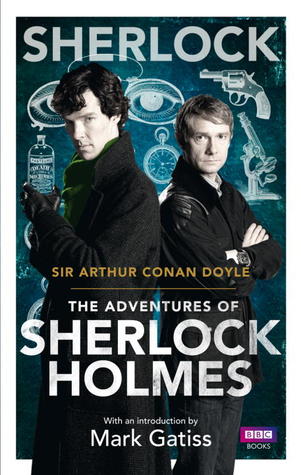
Review: The Adventures of Sherlock Holmes by Sir Arthur Conan Doyle

theadventuresofsherlockholmesThe Adventures of Sherlock Holmes by Sir Arthur Conan Doyle

My Rating: 5/5 TARDISes

Series: Sherlock Holmes #1

Date Published: May 1st, 2012 (first published October 14th, 1892)

Publisher: BBC Books

Pages: 324 pages

Source: Purchased

Links: Goodreads | Amazon | Book Depository

The Adventures of Sherlock Holmes is the first collection of short stories Arthur Conan Doyle wrote about his famous detective. Each work chronicles the various cases that Sherlock Holmes works on, accompanied by John Watson, who narrates the tales. Originally, the twelve stories featured in this collection were individually published in The Strand Magazine between 1891 and 1892; they were then released together as a whole novel in late 1892.

I had read one or two individual stories in school over the years, but this was my first real experience with Sherlock Holmes and Arthur Conan Doyle’s work; and I completely fell in love with everything about them. I love a good mystery that makes me really think, and that is exactly what I got over and over again throughout this collection. I found each story to be incredibly absorbing, and they kept me guessing right up until the very end. Each one is full of twists and turns that constantly surprise, but wrap up perfectly in the final pages.

Doyle’s writing style was so captivating, making this a very enjoyable read for me. He is a master at pulling the reader completely into the story, fully into the characters’ lives, and making you care for each and every one of them. In Holmes, he has created a character that does extraordinary, seemingly impossible things in a completely believable way. Despite his extreme intelligence and astonishing powers of observation and deduction, Sherlock Holmes is still realistic. Relatable. Genuinely human.

Watson is a perfect narrator and companion for the great detective. He also works as a great foil for Holmes. This may be a bit surprising because Watson is an exceedingly intelligent man in his own right, so he doesn’t function as a complete contrast to Holmes. Instead, he highlights Holmes’s abilities with his own intelligence by being unable to fully understand his process of deduction. However, Watson as a character still holds his own, and proves to be invaluable at many points during the cases. Overall, they are a wonderful pairing.

So, in short, I absolutely adored this book. Reading these stories gave me that warm, cozy feeling of curling up by the fire with a cup of hot tea while it’s snowing outside. I can’t wait to continue on with the other books in the series, and dive back into this world and these amazing adventures.

Now, I’ll very briefly go more in-depth with a summary of each of the individual stories in the collection. Note: These are spoiler-free descriptions.

My favorite stories from this collection were The Red Headed League, A Case of Identity, The Man with the Twisted Lip, The Adventure of the Blue Carbuncle, The Adventure of the Speckled Band, and The Adventure of the Copper Beeches.

  1. A Scandal in Bohemia

This is one of the most famous stories in the collection, starring Irene Adler or, to Holmes, “the woman”. In this story, Holmes is hired by the King of Bohemia to retrieve blackmail, in the form of a photograph, from opera singer Irene Adler, with whom he had been romantically involved with a few years earlier. Now that he is engaged to a woman of noble birth, Adler has been threatening to send this photograph to the family of his fiancée, which would cause them to call of the wedding. It was fascinating to watch Holmes match wits with Adler, who is almost as intelligent and as cunning as him.

  1. The Red Headed League

A redheaded man named Jabez Wilson comes to Holmes with questions about a job he was urged by a friend to take that offered a high salary, but was solely for redheaded men. Wilson was the only one chosen for the job, simply because his hair was the right shade of red. In this story, Holmes is able to connect and solve two cases that appear to be completely unrelated. This was one of my top favorites of the collection.

  1. A Case of Identity

In A Case of Identity, a woman named Mary Sutherland comes to Holmes when her fiancée mysteriously disappears on the morning of their wedding. That very same morning, he had made her promise to remain faithful to him no matter what happened. Holmes soon discovers that this man is not exactly whom he has made himself out to be. This was another one of my favorites!

  1. The Boscombe Valley Mystery

Inspector Lestrade enlists Holmes to solve the murder of a man named Charles McCarthy, whose son has been linked to the crime. The evidence points very strongly toward the son, but his fiancée, and Holmes himself, maintain a belief in the man’s innocence. The twists and turns that this story took were incredible; they hooked me immediately, and kept me thinking until the very end.

  1. The Five Orange Pips

A man named John Openshaw presents Holmes with a case about multiple strange deaths in his family. Openshaw’s uncle received a letter from India containing five orange pips, then passed away no more than two months later. A few years after this, his father also received a letter with the five pips and died three days later. Openshaw himself has just received this very same letter, and is certain he will meet the same fate.

  1. The Man with the Twisted Lip

A man named Neville St. Clair has disappeared, but his wife tells Holmes that she is certain that she saw him looking out of the upstairs window of an opium den. St. Clair is a respected businessman, and not only is it unlikely he would be in there, when she went into the house, the only person inside was an old beggar. I loved the way that this mystery played out, and it was one of the few that I was actually able to deduce the answer to myself!

  1. The Adventure of the Blue Carbuncle

A former thief is arrested when the Countess of Morcar’s priceless blue carbuncle is found missing. However, a man with whom Holmes is acquainted discovers this blue carbuncle in the throat of his Christmas goose. This was a definite favorite of mine because, as well as being an intriguing mystery, I found it to be incredibly funny and witty at times!

  1. The Adventure of the Speckled Band

This is arguably Arthur Conan Doyle’s most famous short story about Sherlock Holmes, and his own personal favorite. A woman named Helen Stoner approaches Holmes with fears that her stepfather is trying to kill her after he makes her move into the bedroom in which her sister died two years prior. Apparently, her sister passed away just before her wedding saying, “it was the Speckled Band”. This is the only one that I had read prior to reading the full collection, and it remains one of my favorites.

  1. The Adventure of the Engineer’s Thumb

Watson attends to a man named Victor Hatherly, whose thumb has just been cut off. While in his office, he relates the story to Holmes and Watson of how he was very secretly hired to repair a machine that compressed “Fuller’s Earth” into bricks. Hatherley was not allowed to know the location of the machine, and was taken to it in a carriage with frosted glass windows to prevent him from learning the route. When he discovered something that implied that the machine is not being used for what he was told it would be, his employer attacked him.

  1. The Adventure of the Noble Bachelor

This case involved the disappearance of Hatty Doran following her wedding to Lord Robert St. Simon. She attended the wedding and they were married, but she disappears from the reception, and her wedding band is found floating in a nearby lake. Holmes also discovers that the servants had kept a former lover of hers from forcing his way into the house earlier that morning, and that she had been seen having a secret discussion with her maid shortly before she went missing. There were elements of this story that I guessed as I was reading, but the ending was very surprising, and even more complex than I thought it would be.

  1. The Adventure of the Beryl Coronet

A banker named Alexander Holder presents Holmes with a case after a client he loans money to leaves a beryl coronet, an extremely valuable public possession, with him as security. Holder heard a noise and woke in the night to find his son holding the coronet, which had been damaged, and now has three beryls missing from it.

  1. The Adventure of the Copper Beeches

A woman named Violet Hunter comes to Holmes after she is offered a job as a governess that has some very unusual requirements attached to it, some of which have to do with altering her appearance in a specific way. Holmes urges her to take this oddly high paying job, and to call him in to investigate as she discovers more about the position, and the family. This was another one of my favorites: a very complex and interesting case.

I most definitely recommend this novel to anyone and everyone, especially if you enjoy classics and a good old-fashioned mystery!

5.0 TARDISes

logo2