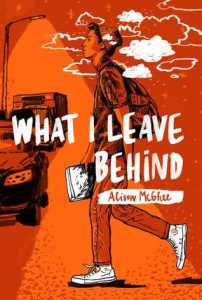
Review: What I Leave Behind by Alison McGhee

whatileavebehindWhat I Leave Behind by Alison McGhee

My Rating: 3/5 TARDISes

Series: Standalone

Date Published: May 15th, 2018

Publisher: Atheneum/Caitlyn Dlouhy Books

Pages: 208 pages

Source: Netgalley

Links: Goodreads | Amazon | Book Depository

Synopsis: After his dad commits suicide, Will tries to overcome his own misery by secretly helping the people around him in this story made up of one hundred chapters of one hundred words each.

Sixteen-year-old Will spends most of his days the same way: Working at the Dollar Only store, trying to replicate his late father’s famous cornbread recipe, and walking the streets of Los Angeles. Will started walking after his father committed suicide, and three years later he hasn’t stopped. But there are some places Will can’t walk by: The blessings store with the chest of 100 Chinese blessings in the back, the bridge on Fourth Street where his father died, and his childhood friend Playa’s house.

When Will learns Playa was raped at a party—a party he was at, where he saw Playa, and where he believes he could have stopped the worst from happening if he hadn’t left early—it spurs Will to stop being complacent in his own sadness and do some good in the world. He begins to leave small gifts for everyone in his life, from Superman the homeless guy he passes on his way to work, to the Little Butterfly Dude he walks by on the way home, to Playa herself. And it is through those acts of kindness that Will is finally able to push past his own trauma and truly begin to live his life again. Oh, and discover the truth about that cornbread.

____________________________________________________________

*I received a copy of this book from the publisher in exchange for an honest review*

This is a spoiler-free review.

I desperately wanted to love this book, and thought that I would, but I ended up feeling pretty lukewarm about it overall. Don’t get me wrong, what is contained in these pages is absolutely beautiful—there are so many touching moments between the very endearing characters. Every page made me fall more and more in love with every single aspect of the narrative—but then it just stopped. I was simply left wanting so much more out of it, and an expansion of the captivating plot and characters.

In this novel, we follow a sixteen-year-old boy named Will, who is attempting to deal with and process his emotions that resulted from his father’s suicide. His days have become repetitive, going from working at the Dollar Only store, walking all over the streets of his neighborhood in Los Angeles, and desperately trying—to no avail—to replicate his father’s famous cornbread recipe.

However, there are certain ties to his father that he cannot seem to face, particularly the blessings store that contains the chest of one-hundred Chinese blessings, his old best friend Playa’s house, and the Fourth Street bridge. After learning the Playa was raped at a party he had attended but left early, he shakes himself out of the sadness that has been controlling his every move.

Wanting to spread some happiness and make a positive impact in the world, he starts to leave small presents for many of the important people in his life: The Little Butterfly Dude, a child he passes on his way home every day; Superman, the homeless man who lives on a street he travels on as he walks to work; and Playa. Through these anonymous acts of kindness and selflessness, he finds that he is able to cope with his own suffering, and continue on with his life in a way that would make his father incredibly proud.

The format that this story is written in is wonderfully unique and adds to the poignancy of the narrative itself. Told in small sections and few words—one-hundred pages, each containing one-hundred words—the style felt so meaningful. On top of this, the writing is lovely and flows incredibly well. McGhee shows a huge amount of talent for creating a well-written and vividly emotional narrative. It is clear that every part of it is meticulously crafted.

Honestly, my main complaint—really my only complaint—is that this story is far too short, and deserved so much more time. The length and format is inventive; however it is nowhere near enough to take this story to the levels it should have gone. Everything about this novel is deeply touching and just plain gorgeous. I adored every second I spent in this world and with these characters.

I not only craved more, I also unfortunately felt like there really should have been more. The brevity of the narrative adds to the depth, but it ended up being a bit too brief, finishing quite abruptly. Though I clearly enjoyed it, I was left feeling unsatisfied. I wanted so badly to spend more time with these characters—to get to know them better. I wish McGhee would have kept that short vignette format, but extended the length of the novel itself, and delved further into the relationships, intense emotions, and Will’s recovery process.

I cannot fully express how beautiful and optimistic this novel is—the world needs more of this positivity and urging to spread kindness. Though it needed more to it, it was such a sweet story, and I do highly recommend giving it a read.

3.0 TARDISes

logo2

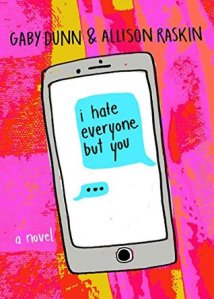
Review: I Hate Everyone But You by Gaby Dunn and Allison Raskin
ihateeveryonebutyouI Hate Everyone But You by Gaby Dunn and Allison Raskin

My Rating: 1/5 TARDISes

Series: Standalone

Date Published: September 5th, 2017

Publisher: Wednesday Books

Pages: 352 pages

Source: Netgalley

Links: Goodreads | Amazon | Book Depository

Synopsis: Dear Best Friend,

I can already tell that I will hate everyone but you.

Sincerely,

Ava Helmer

(that brunette who won’t leave you alone)

We’re still in the same room, you weirdo.

Stop crying.

G

So begins a series of texts and emails sent between two best friends, Ava and Gen, as they head off to their first semesters of college on opposite sides of the country. From first loves to weird roommates, heartbreak, self-discovery, coming out and mental health, the two best friends will document every moment to each other. But as each changes and grows into her new life, will their friendship be able to survive the distance?

I Hate Everyone But You, the debut novel by two emerging major talents in YA, Allison Raskin and Gaby Dunn, is a story about new beginnings, love and heartbreak, and ultimately about the power of friendship.

____________________________________________________________

*I received a copy of this book from the publisher in exchange for an honest review*

This is a spoiler-free review.

I have put off writing my review of this novel for quite a while now for a few reasons. First of all, it has been a long time since I disliked a book as much as I disliked this one, therefore, I have a lot to say. So many aspects annoyed, frustrated, and completely enraged me due to how close to home they hit. However, I absolutely despise writing rant-filled reviews—I like to be as fair as possible—and immediately after I finished reading, I didn’t think I was capable of being calm.

Another aspect that is still causing me to be hesitant is my lack of real-life, firsthand knowledge of the situation that one of the girls was experiencing. Even though I was not able to fully connect to what she was dealing with, I still found that I had a lot of opinions on the way it was handled and presented from a bit of an “outsider’s” point-of-view. It’s about time that I gave this a try though, so I will do my best to explain my feelings as well as I can. Please remember, this is all just my personal opinion and interpretation of the novel.

In this novel, we follow two best friends—Ava and Gen—as they navigate their first year of college on opposite sides of the country. This is the first time they have had to deal with a separation this huge, and understandably, the new experiences ahead feel incredibly daunting without the other by their side. In lieu of seeing each other in person, they keep up a correspondence every day, discussing all the aspects of their new lives and trying to maintain their strong friendship.

Admittedly, this is not something that I would have normally been interested in reading. However, the format that the story is told in is originally what caught my eye, and my attention. The entire novel is told through texts and emails sent between Ava and Gen as they support each other while trying to bridge the distance between them. Ever since I was a kid, I’ve loved stories told through messages—I’m not sure why, but they have always been so much fun for me. Unfortunately, that was not the case this time around.

Let me begin by talking about Ava, as the themes used in her storyline are ones that I have the most personal experience with. These main themes are anxiety/social anxiety and OCD, and the obstacles mental illness can throw in your way—or at least that is what it is trying to portray. Instead, it ends up coming across as a very stereotypical and downright inaccurate caricature of serious mental illnesses, used many times for comedic purposes.

So, I may be overreacting to this as I do on occasion when it comes to the depiction of mental illness. And I completely understand that all mental illnesses manifest in unique ways for every single person dealing with them. But, as someone who has dealt with severe anxiety/social anxiety and OCD all their life, I am incredibly upset by the way it is shown here. Believe me, I am someone who truly values the medicinal effects of humor, and I do enjoy poking fun at the strangeness of my anxiety plenty of the time. However, here, every aspect is treated as a complete joke.

The absolute biggest problem I have with it is that a huge part of the time, her actions show the exact opposite of the severe social anxiety she claims to have—no, joining a sorority and throwing yourself at men is not a good example. As I said before, her anxiety only pops up when it can make a situation into a joke, and it is written in that clichéd “oh, I’m so ‘hashtag relatable’” kind of way. I apologize for the way I’m coming across here. I’m just absolutely fed up with the way people belittle the incredible amount of pain that this type of mental illness inflicts on those of us who have to deal with it on a daily basis.

Then we have our other main character, Gen. The main themes in her storyline are exploring one’s sexuality, experimenting and discovering what is right for you, and how one’s sexuality does not need to conform to a strict label. However, this is not the message that I feel her actions conveyed. It comes across more like she is very sure of herself and is just using people, manipulating their emotions, and putting herself at risk.

Granted, maybe this is my interpretation because of my own personal experiences, or lack of experience. I connect with her on what it’s like to learn about one’s sexuality and that desire to break away from society’s habit of labeling it. I am unable to connect with her actions though, as my journey, purely due to my personality, has been much less active. All in all, I am fairly irritated because I do not feel like her plotline positively or realistically portrays the queer community, particularly what it is like for those of us who find that we attracted to both genders.

Now, on to Ava and Gen’s friendship in general. Things started out well at the beginning of the novel—they are shown to have a rather sweet relationship and are incredibly close to each other. It’s very easy to relate to the sadness of having to be separated from your best friend whom you’ve always had by your side to face the challenges of life—I have been going through the exact same thing in the last few years. They are faithfully there to support each other through the changes that come with college living. However, somewhat quickly, things begin to take a turn for the worse, and by the halfway point of the novel, their friendship has proven itself to be horrendously toxic.

First of all, Ava is constantly acting relatively homophobic in many of her conversations with Gen when Gen shares things about her sexuality. And again, this is used as another tactic to create humor in the plot, which I think is atrocious. But the most major issue with their friendship is how they support and strongly encourage each other to make terrible, dangerous, and damaging decisions. It is so over-the-top, it’s extremely hard to believe that either of these girls actually cares about the other. Their relationship feels manipulative and destructive more than anything.

Suffice it to say, I think we can conclude that I Hate Everyone But You was clearly not for me. I of course applaud any authors committing themselves to helping diversify literature. Diversity is something we need so much more of, and sexuality, gender labels, and mental illness are all wonderful topics to choose. And I did love the format of the book—it made for a very fast read, and was the only really enjoyable part. The overall story itself just did not come across in the right way at all. Personally, I cannot, in good conscious, recommend giving this a read.

1.0 TARDIS

logo2

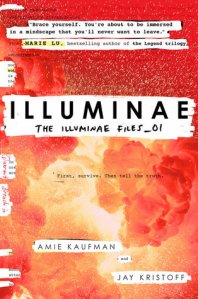
Review: Illuminae by Amie Kaufman and Jay Kristoff

illuminaeIlluminae by Amie Kaufman and Jay Kristoff

My Rating: 5/5 TARDISes

Series: The Illuminae Files #1

Date Published: October 20th, 2015

Publisher: Knopf Books for Young Readers

Pages: 602 pages

Source: Purchased

Links: Goodreads | Amazon | Book Depository

Synopsis: This morning, Kady thought breaking up with Ezra was the hardest thing she’d have to do. This afternoon, her planet was invaded.

The year is 2575, and two rival megacorporations are at war over a planet that’s little more than an ice-covered speck at the edge of the universe. Too bad nobody thought to warn the people living on it. With enemy fire raining down on them, Kady and Ezra—who are barely even talking to each other—are forced to fight their way onto an evacuating fleet, with an enemy warship in hot pursuit.

But their problems are just getting started. A deadly plague has broken out and is mutating, with terrifying results; the fleet’s AI, which should be protecting them, may actually be their enemy; and nobody in charge will say what’s really going on. As Kady hacks into a tangled web of data to find the truth, it’s clear only one person can help her bring it all to light: the ex-boyfriend she swore she’d never speak to again.

BRIEFING NOTE: Told through a fascinating dossier of hacked documents—including emails, schematics, military files, IMs, medical reports, interviews, and more—Illuminae is the first book in a heart-stopping, high-octane trilogy about lives interrupted, the price of truth, and the courage of everyday heroes.

____________________________________________________________

This is a spoiler-free review.

Illuminae is a masterpiece—an absolute work of art in so many ways. It is one of the most captivating and utterly addictive books I’ve read in a long time. I’m always wary when it comes to books that have extreme amounts of hype surrounding them, but now, I can’t believe it took me so long to pick it up. I feel like I have so much I want to talk about, so many thoughts, and yet I have absolutely no idea where to even begin. Suffice it to say, this book absolutely blew my mind and has easily become one of my all-time favorites. It was everything I love in a science fiction novel and so much more—it completely exceeded my expectations.

We are thrown into the action right from page one. At the start of the novel, a small, ice-covered planet called Kerenza is attacked by a corporation named Beitech. The planet is completely destroyed, resulting in the deaths of many of its citizens. However, three ships are able to evacuate those lucky enough to reach them in time. The refugees begin a long journey to safety, pursued by the only surviving Beitech ship, which is intent on wiping out all witnesses of the Kerenza attack.

But the danger is not limited to their attackers—there are darker forces at work among the survivors as well. Internal conflict, a mutating virus, and a massive amount of deceit are at play. Not to mention a rogue and potentially deadly AI system controlling one of the main ships. The principal characters, Kady and Ezra, are thrust into the middle of the conflict, and must reconcile in order to work together to separate truth from lies and ensure the safety of their people.

The novel is told entirely through documents such as transcripts, emails, instant messages, and official files, all compiled together into one dossier. I’ve always had a huge issue when it comes to concentrating on things like textbooks that are set up with a bunch of extra boxes of information scattered all over the pages, and I was worried that this would be structured in the same way. Thankfully, this is absolutely nothing like that—it is incredibly easy to follow and maintains a very smooth reading experience throughout.

The style and art of the files is wonderful, and this was definitely the most unique book I’ve ever read. Everything is meticulously put together and highly detailed, adding to the realism of the format. This pulled me so deeply in and completely absorbed me into the world, making every moment even more heart-pounding and tense—it suits the narrative perfectly and truly enhances the reading experience.

Character creation and portrayal is a bit unconventional compared to the most common presentation in many novels. Here, we follow a huge cast of characters, but since the entire story is told through documents, the reader doesn’t get a chance to connect with them on a first-hand or very personal level. I’ll admit I was pretty wary about this going in, thinking there would be too much of a disconnect to actually feel for and become attached to any of the characters. However, I was extremely pleasantly surprised by the way it ended up coming across.

For me personally, I had absolutely no trouble feeling the intense emotions prevalent throughout the narrative. This is a testament to the incredibly strong writing of Kaufman and Kristoff. No matter how well or for how long I knew a character, their struggle and their emotions touched me deeply.

Knowing every little detail about their lives and who they are isn’t important—the focus is on connecting with them and the situation on a basic and relatable level. The universal and instinctual human reaction to the profound suffering, pain, and fear of others is relied upon to create the powerful story that is found within these pages.

In terms of primary characters, Kady, Ezra, and AIDAN are the main focus of the narrative. Kady is an extremely strong, intelligent, and badass heroine. She demonstrates such bravery through all her actions and commitment to saving the lives of others. Overall, I felt as though I connected with her pretty well, especially toward the end, and I really loved her. And AIDAN—AIDAN is utterly brilliant. AIDAN definitely ended up being the most intriguing and three-dimensional character, in my opinion.

I had the most trouble connecting with Ezra, though he also does not have as much of a part in the novel as the others do. He honestly doesn’t do a whole lot, though I was actually really glad that there was more of a focus on Kady anyway. Some of Ezra’s humor was a bit off-putting to me at times, but he did grow on me the further I got into the story. He is a very kind and caring person, and obviously loves Kady very much. I wasn’t thrilled with the romance—it didn’t really stand out to me and the way it’s presented is a bit awkward. However, I got enough of a sense of their feelings for each other that I still rooted for the pair.

Returning to the writing itself, it is absolutely fantastic and enthralling. At no point in the novel do you get any sense that it has been written by more than one author—the entire story is one fluid piece. I loved the combined storytelling style of Kaufman and Kristoff—they are clearly both incredibly talented authors and they work wonderfully together as a pair. Every aspect of the plot is spectacularly vivid. I was able to visualize everything so well, and I distinctly felt all the emotions the events of the story evoked.

So basically, I’m sort of completely obsessed with this novel—I already want to go back and read it again. It was action-packed and riveting from start to finish, and I found that I could barely put it down. I have been thinking about it non-stop since I began reading, and I am still so excited by every aspect. I am currently trying my hardest to be responsible and avoid picking up Gemina until after I’ve caught up on some review books, but the temptation is intense. Just in case it’s not obvious enough already, I very highly recommend reading Illuminae.

5.0 TARDISes

logo2

Review: Spin the Golden Light Bulb by Jackie Yeager
spinthegoldenlightbulbSpin the Golden Light Bulb by Jackie Yeager

My Rating: 2.5/5 TARDISes

Series: The Crimson Five #1

Date Published: January 9th, 2018

Publisher: Amberjack Publishing

Pages: 280 pages

Source: Publisher

Links: Goodreads | Amazon | Book Depository

Synopsis: It’s the year 2071 and eleven year-old Kia Krumpet is determined to build her 67 inventions, but she won’t have the opportunity to unless she earns a spot at PIPS, the Piedmont Inventor’s Prep School. Kia, who has trouble making friends at school, has dreamed of winning the Piedmont Challenge and attending PIPS ever since she learned that her Grandma Kitty won the very first Piedmont Challenge. After she and four of her classmates are selected to compete for a spot at PIPS, they travel by aero-bus to Camp Piedmont to solve a task against forty-nine other state teams to earn their place at the best inventor’s school in the country.

____________________________________________________________

*I received a copy of this book from the publisher in exchange for an honest review*

The first part of this review is completely spoiler-free. There are very minor and vague spoilers in the second part of this review.

Spin the Golden Light Bulb is a debut middle grade novel centering around the brilliant minds of a group of young inventors. It touches on topics such as teamwork, forgiveness, and loyalty, and how to include those values in the achievement of personal goals in the area of one’s passion. It encourages having a mind that is open to all possibilities and to the acceptance of other people. Images of strong relationships—both with friends and family—and learning to come together to achieve a goal in a fair and inclusive way emanate from every page. This is a delightfully wholesome novel for young readers that stresses some incredibly important and positive messages.

In this novel, we are transported to the year 2071, and follow an eleven-year-old girl named Kia Krumpet. Kia is desperate to earn a spot at Piedmont Inventor’s Prep School—or PIPS—so she can begin working on her sixty-seven inventions. But in order to secure her place at PIPS, she must first win a Golden Light Bulb in the Piedmont Challenge, a feat that has not yet been accomplished by any student at Crimson Elementary. If she doesn’t, she will have to choose one category of study to dedicate the next six years of her schooling to, none of which would allow her to achieve her dreams.

After Kia and four of her classmates end up winning the chance to compete for enrollment in PIPS, they travel to Camp Piedmont, where the next phase of the challenge is to begin. There, everyone competing is split into groups and are given a task that they need to solve through the creation of a unique invention. Kia’s group—The Crimson Five—must contend with teams from forty-nine other states and build something that will prove that they have the talent necessary to earn a place at the best inventor’s school in the entire country.

Forming strong, healthy relationships with others is a key part of this narrative. There are many internal obstacles that Kia and the others must overcome in order to accept each other for the way they are. In addition, we are shown the importance of being one’s self and staying true to one’s values. There were times where I felt that Kia was maybe being a bit too immature compared to how she presents herself most of the time. However, this ended up highlighting how much she changes and matures throughout the course of the narrative.

Yeager’s writing itself is very strong and easy to read. Her voice is absolutely perfect for the age of the readers this novel is meant for. She does a brilliant job of vividly creating a fun and distinctive world that stimulates the imagination. The technology is very unique and exciting to envision—almost magical. Yeager’s characters are multi-dimensional and clearly evolve through all the obstacles they must face. The way she portrays the team gradually learning to work together as well as forming trust and, ultimately, close friendships is fantastic.

One problem that I had with the plot of the novel was with the believability of the team’s first approach to creating their major invention. These kids are supposed to be some of the brightest minds in the country, capable of not only building, but imagining all types of gadgets and groundbreaking technology that will power the advancement of society.

Kia’s previous ideas for her own personal inventions are complex and innovative, and they show off her natural skill and remarkable intellect. However, what the team eventual decides on for their major invention is honestly pretty disappointing. It just felt as if they were not showing much if any of the amazing talent that they all clearly possess. It’s hard to believe that their big idea would manifest in the form that it does.

Now, please bear with me for this next part. I do realize how silly this is going to sound since this is a middle grade novel, so I apologize in advance.

I’m left feeling conflicted over my biggest issue with the plot—the ultimate invention they create for the contest. At first it feels like a really neat idea, giving us a unique way to look into the past and learn in detail about any person in history. Being able to essentially bring the past back to life and explore any individual’s role in society would be incredible. However, the invention itself quickly takes a turn for the worse, feeling quite creepy and disturbing rather than uniquely fascinating.

There is a fine line between innocently gaining knowledge and invading privacy, and this quickly descends into the latter category. It becomes particularly concerning when Kia and the rest of the team use their invention multiple times to access records of things like private phone conversations and incredibly personal information.

Everyone’s right to privacy is a very topical discussion, and this novel is an eerily realistic potential future. This story raises the question of what parts of our lives are acceptable to be made public in a database and what parts should be kept out. It delves into an extremely morally gray area under the guise of a fun and innovative creation by a group of highly intelligent young minds.

On top of all this, they don’t actually come up with any of the real mechanics of the invention—they end up taking a previous team’s creation and dressing it up a little bit. That left me feeling very disappointed, as it completely wipes out the most important messages Yeager is trying to convey through this story. The importance of thinking outside the box, being creative, and achieving a goal through teamwork cannot possibly be shown through what they end up doing. Even the initial project they come up with at least demonstrated those themes much better.

Are these things that a young reader in this book’s target age range would notice? Most likely not. These thoughts are just a mixture of my typical over-thinking and my admittedly very cynical adult view of the world. I am definitely not the right audience for this particular novel and I completely realize that.

Overall, this is a good book for children in the range of maybe eight to eleven. It promotes topics that are essential to learn from a young age, and this story is an imaginative and entertaining way to encourage people to open their minds to all possibilities and understand that they all have the ability to do great things. This is not a novel that will necessarily be enjoyable to people of any age, but I would recommend this to young readers due to the positivity of most of the messages at the center of this story.

2.5 TARDISes

logo2

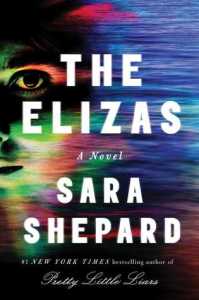
Review: The Elizas by Sara Shepard

theelizasThe Elizas by Sara Shepard

My Rating: 3.5/5 TARDISes

Series: Standalone

Date Published: April 17th, 2018

Publisher: Atria Books

Pages: 352 pages

Source: Netgalley

Links: Goodreads | Amazon | Book Depository

Synopsis: When debut novelist Eliza Fontaine is found at the bottom of a hotel pool, her family at first assumes that it’s just another failed suicide attempt. But Eliza swears she was pushed, and her rescuer is the only witness. 

Desperate to find out who attacked her, Eliza takes it upon herself to investigate. But as the publication date for her novel draws closer, Eliza finds more questions than answers. Like why are her editor, agent, and family mixing up events from her novel with events from her life? Her novel is completely fictional, isn’t it? 

The deeper Eliza goes into her investigation while struggling with memory loss, the closer her life starts to resemble her novel until the line between reality and fiction starts to blur and she can no longer tell where her protagonist’s life ends and hers begins.

____________________________________________________________

*I received a copy of this book from the publisher in exchange for an honest review*

This is a spoiler-free review.

Though I’ve known about her work for years, this is the first novel by Sara Shepard that I’ve ever read—and I ended up being pleasantly surprised by this particular story. It is a pretty solid young adult thriller. Being quite a huge fan of suspenseful mysteries—particularly any type with unreliable or biased narrators—this caught my attention immediately. I am much more used to reading adult psychological thrillers, and this is not quite on par with the plot structure and intensity of many of those. As it is a young adult novel, it is a bit less complex and much lighter, so it’s important to note that going in. However, The Elizas is an entertaining and heart-pounding story that is sure to hook its intended audience.

In this novel, we follow a young woman named Eliza Fontaine, a debut novelist whose book release date is rapidly approaching. But life takes a strange turn when she is pulled from the bottom of a hotel pool. Her family believes it to be just another suicide attempt—she insists it was an attempted murder. With only one person on her side, and what seems like the whole world trying to convince her she’s just insane, Eliza must investigate the attack herself.

However, as she struggles to regain lost memories, every avenue she explores only ends up raising even more questions. And suddenly, her novel is starting to sound less like a story and more like her life. Told in chapters that alternate between Eliza’s point of view and excerpts from her book, The Dots, the parallels become undeniable, and the line between reality and fiction becomes increasingly blurry.

I’ll admit, it took me quite some time to fully immerse myself in this novel. The first half of Eliza’s story plays out very slowly, and is often times extremely repetitive. This makes sense in the grand scheme of things, since we are primarily dealing with her attempting to regain memories she cannot seem to unlock. But I still feel that her plotline is in need of more events—however small—to help us become more invested in her as a character. For awhile, I found myself being much more interested in the excerpts from The Dots instead of the main storyline, though both are equally important.

The narrative came across as a bit choppy to me in the beginning—it feels like things are repeating and going nowhere, there is a sudden heightening of the tension, and then we are back to the same circumstances. This is obviously congruent with the situation of someone dealing with memory loss, so I completely understand the effect that Shepard is going for. However, I do wish there had been a tiny bit more added to Eliza’s experiences, just to gradually pull the reader deeper into her life throughout the novel as a whole.

Unreliable narrators are, by nature, inconsistent, and always add a good amount of confusion into the process of getting to know who they are, as well as what is truly going on. Eliza is especially unpredictable all the way through—but at the start, her personality comes across like Shepard can’t decide what to do with her instead of what might be naturally erratic for her mental state. In general, though, I do think Shepard really captures and deals with all the physical and mental health aspects of this novel clearly and believably.

Even with the initial lagging of the main plotline, Shepard manages to build quite a lot of suspense in both stories. She sprinkles just enough intrigue into most of the early chapters, and I was always at least a little curious to find out what would happen next. The switching between Eliza’s point of view and the excerpts from The Dots added a great deal to the tension building up as things progressed. And, despite it being a little rocky at first, I did consistently become more and more hooked.

That second half though—oh boy. I was absolutely riveted to every page. Every aspect of the story escalates so quickly, and even though I had predicted some of the ending, it still had me on the edge of my seat. For me, Shepard ended in the strongest way possible—she made every last bit pack a punch, and threw in a few surprisingly powerful twists. Though it is not hard to guess most of what is going on and roughly how things will shake out, there are plenty of details that you most likely will not see coming. That, coupled with the strength of the overall reveal, truly enriches the novel as a whole.

Shepard also does a relatively good job with her character creation. They are all very clearly described and, aside from Eliza, have static personalities the whole way through. This means that not all of the characters are very multi-dimensional, but they are still depicted well and fit very nicely into the plot. Eliza is definitely a dynamic character—our view of her is constantly changing and building until everything is fully revealed in the end. And the majority of the relationships between Eliza and the others are highly realistic and comprehensible.

The one element that I never got fully on board with was the romance. In the first place, it was a severe case of insta-love. When they first meet, Eliza goes from describing him like he is sort of gross and creepy to abruptly feeling incredibly turned on basically by her sudden thought of them having sex. Over the short time they initially spend together, she goes back to showing little interest in him, while he is awkwardly proclaiming his undying love for her. And voila, they are now a couple. Though their relationship was sweeter toward the end, I spent most of it trying to comprehend how it happened, while occasionally feeling mildly disturbed.

I found Shepard’s writing style to be fairly strong. It didn’t particularly stand out or completely captivate me, but it flows well for the narrative she weaves and is very easy to read. She crafts a good mystery, following up on all the various threads to the point were I couldn’t personally think of anything left completely unexplained. Shepard also writes very cinematically—her descriptions are vivid, and the interactions between characters were stellar. We are able to clearly visualize everything playing out, and distinctly feel the clarity that Eliza is slowly experiencing.

Overall, if this sounds good to you—or if you’re looking for a quick thriller—I would highly recommend giving this novel a try, especially if you are a young adult reader. While, like I said, it’s not going to have the intensity and depth of an adult psychological thriller, and it isn’t entirely unpredictable, it really does have a lot going for it. It is gripping enough to pull a mystery fan in, and just chilling enough to make for an entertaining read. As for me, I ended up enjoying this story more than I thought I would, and I am definitely interested in reading some more of Shepard’s work.

3.5 TARDISes

logo2

Review: The Witch Doesn’t Burn in This One by Amanda Lovelace

35924698The Witch Doesn’t Burn in This One by Amanda Lovelace

My Rating: 3/5 TARDISes

Series: Women Are Some Kind of Magic #2

Date Published: March 6th, 2018

Publisher: Andrews McMeel Publishing

Pages: 208 pages

Source: Netgalley

Links: Goodreads | Amazon | Book Depository

Synopsis: 2016 Goodreads Choice Award-winning poet Amanda Lovelace returns in the witch doesn’t burn in this onethe bold second book in her “women are some kind of magic” series.

The witch: supernaturally powerful, inscrutably independent, and now—indestructible. These moving, relatable poems encourage resilience and embolden women to take control of their own stories. Enemies try to judge, oppress, and marginalize her, but the witch doesn’t burn in this one.

____________________________________________________________

*I received a copy of this book from the publisher in exchange for an honest review*

Unfortunately, this collection of poetry ended up really disappointing me. After the fantastic first collection, The Princess Saves Herself in This One, I felt rather let down by this one. Don’t get me wrong, I still enjoyed it quite a bit, but I didn’t think it was on par with Lovelace’s previous work. Her first collection tells a story of her life—a personal journey of discovery with messages that evoke intense and relatable emotions. Alongside these poems, there is a loose fairytale-type narrative going on at the end of each section, and they reflect every part of her journey.

That same format of the background story is true for this collection, but the poems deal with broader topics, so they don’t have that same intimate quality as her previous poetry. Lovelace deals with some incredibly tough matters here, and she does so in a very eye-opening way. However, though I of course applaud the fact that she is speaking out on these subjects, I just personally did not feel as emotionally invested in the poems, and I found them a bit repetitive at times.

One of the things that still rings true in this collection is Lovelace’s incredible talent for writing beautiful and impactful poetry. Though these particular poems did not resonate with me quite as much as her others, her words are still extremely powerful and relatable. Everything she has to say is thought-provoking and empowering, but the messages she is trying to convey come across as somewhat one-sided at times.

She has a very strong feminist voice, though I felt that she approached the topic in more of an all-or-nothing style rather than speaking in an equal and balanced way. Feminism, and any type of empowerment movement in general, should not focus on being dominant over others, but should instead focus on creating equality among all. I still do very much enjoy Lovelace’s poetry, so I definitely plan on continuing to read her work in the future.

3.0 TARDISes

logo2

Mini Review: Herding Cats by Sarah Andersen

herdingcatsHerding Cats by Sarah Andersen

My Rating: 4/5 TARDISes

Series: Sarah’s Scribbles #3

Date Published: March 27th, 2018

Publisher: Andrews McMeel Publishing

Pages: 108 pages

Source: Netgalley

Links: Goodreads | Amazon | Book Depository

Synopsis: Sarah valiantly struggles with waking up in the morning, being productive, and dealing with social situations.

Sarah’s Scribbles is the comic strip that follows her life, finding humor in living as an adulting introvert that is at times weird, awkward, and embarrassing. 

____________________________________________________________

*I received a copy of this book from the publisher in exchange for an honest review*

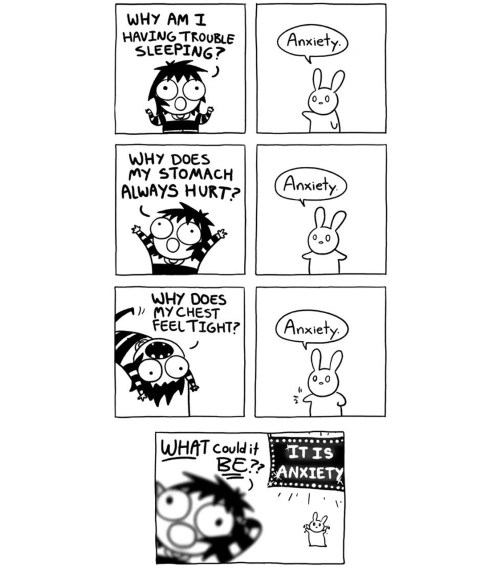
This is the third installment in the Sarah’s Scribbles series of graphic novels and, like the first two, it is another hilarious and adorable book. She always creates such charming and relatable comics that are bound to make you laugh, especially if you see yourself in her work. Andersen’s endearing art and witty text combine to tell a story of the daily struggle to “adult” from the point of view of an introvert. And, as I definitely fall into this category, you can understand just how much I relate to her experiences.

IMG_5934

These are always short, fast reads that unfailingly lift my spirits and put me in a better mood. Andersen makes us look at ourselves and our various quirks by opening up about her life and who she is. Never once have I had trouble connecting the topics she focuses on to my personal life experiences and behavior.

IMG_5939

Apart from the hilarity of it all, it does serve another purpose in my opinion. While everything about this book is pretty light and fluffy, it still reminds you that you are not alone in this world—you are not alone in the way you feel. And it teaches the most important lesson of all—the best way to deal with the difficult things in our lives, and really any aspect in general, is to combat them with a great sense of humor.

IMG_5938

4.0 TARDISes

logo2

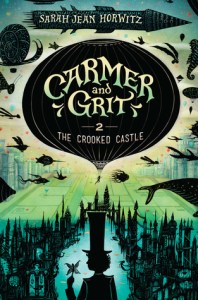
Review: The Crooked Castle by Sarah Jean Horwitz
thecrookedcastleThe Crooked Castle by Sarah Jean Horwitz

My Rating: 5/5 TARDISes

Series: Carmer and Grit #2

Date Published: April 10th, 2018

Publisher: Algonquin Young Readers

Pages: 368 pages

Source: Publisher

Links: Goodreads | Amazon | Book Depository

Synopsis: Shortly after saving the faeries of Skemantis, magician’s apprentice Felix Carmer III and his faerie companion, Grit, head out to see the world. They soon come across a mysteriously magical flying circus. As they get to know the outlandish world of Rinka Tinka’s Roving Wonder Show, it becomes clear there’s something not quite normal about this circus or its inventor—and that recent airship disasters plaguing nearby Driftside City may have a sinister explanation.

Fans of the Wildwood trilogy and Lockwood & Co. series will love the thrills and chills of The Crooked Castle as it takes readers up in the air with a flying circus, under the sea to the evil Unseelie kingdom, through a terrifying magical snowstorm, and on a chase with the menacing Wild Hunt.

____________________________________________________________

*I received a copy of this book from the publisher in exchange for an honest review*

This is a spoiler-free review.

This is one of those novels that is very challenging to review because of how much I loved it—I have absolutely no idea where to start. At the beginning of last year, I read the first book in this series, The Wingsnatchers, and it quickly ended up becoming one of my all-time favorites. The Crooked Castle was, by far, my most anticipated book of this year, and I was not disappointed in the least. This novel is equally as charming, thrilling, and heartwarming as the last. I so enjoyed returning to this beautifully crafted world and following the adventures of this incredible cast of characters. This novel is pure magic.

We begin following Carmer and Grit not long after their heroic acts in Skemantis, as they set out on their journey to see the world. Though they are pursuing adventure, it usually finds them first—and this time around, it literally comes crashing into their lives in the form of a balloon and its balloonist, Bell Daisimer. Bell joins the pair in order to get to a city where he can find the necessary parts to repair his balloon, but his stay is not quite as temporary as they all expect.

They soon discover a glider mixed up in the remnants of Bell’s balloon, and inside the glider is an exclusive invitation to Rinka Tinka’s Roving Wonder Show—a massive flying circus. Upon arrival in Driftside City, and after gaining access to the Wonder Show, it becomes apparent that there is more to this flying circus than meets the eye. Everything appears to be much more mysterious—and decidedly too magical—than they ever could have anticipated.

To top it off, they learn of a whole slew of unexplained airship disasters that have recently been plaguing the city. In their attempts to investigate just what is behind these accidents and the inner workings of the show itself, they stumble across dark secrets and a lot of wicked Unseelie fairies as they attempt to save the lives of their newfound friends, as well as their own.

I completely devoured this novel. It immediately pulled me in, swept me away on an adventure, and melted my heart once again. Taking place in a steampunk world and packed with lovable characters, amazing inventions, and enchanting magical elements, it is such an utterly charming read. The narrative is incredibly fast-paced and exciting, with new twists and turns constantly popping up. Each page makes you eager to get to the next, and I found it difficult to put down.

Reading this story was an absolute joy–there is such a nostalgic tone to it for me. It made me feel so warm and comforted, as though it had wrapped itself around me like a cozy blanket. That is the same pleasant sense so many of my favorite books from my childhood evoked, and I love that I can still reflect on and experience that today due to novels like these. I can see myself cherishing these stories for a long time.

Horwitz’s remarkable talent for storytelling stands out even more than it did before. Her description and world-building are top-notch and her words flow flawlessly from page to page. Every single part of this story is crafted so meticulously, down to the most minor details, and filled with a tone that sparks that childlike sense of wonder. She knows exactly how to unfold fascinating stories, brimming with elements similar to those of a classic tale. It is easy to see the appeal of her work and nearly impossible not to feel a connection to it on some level.

The characters are one of the most wonderful aspects of this story. Whether they are lovable or despicable, they are so vivid. I love the fact that we are able to see more of Carmer and Grit’s friendship and how it has progressed since the last novel. They are a perfect pairing and complement each other so well. And I absolutely adored the new additions to the cast, particularly Bell and another character that enters closer to the end (no spoilers!). Everyone is so fleshed out and multi-dimensional, so it is hard not to become emotionally invested in them and their lives—they will work their way into your heart.

Horwitz seamlessly captivates her readers by making her work accessible to all generations. It is hard not to get caught up in this fantastical world—the type that fuels your imagination and feeds your soul. She not only has a huge amount of talent as a writer, but she is also extremely gifted when it comes to writing fresh, unique stories that still retain that timeless, fairytale-like quality. She is truly doing what she is clearly meant to do by writing these types of novels, and I am completely blown away by what she has created.

Overall, I wholeheartedly adored this novel and never wanted it to end. It met and exceeded all of my expectations, and I was completely enthralled all the way through. Just like the previous installment, Horwitz has produced a story that—while targeted at a middle grade audience—is universally enjoyable, spanning every age group. This novel is an absolute masterpiece and will undoubtedly touch the hearts of every reader. I very highly recommend diving into this enchanting world, and I hope there will be more stories to come in the near future.

5.0 TARDISes

logo2

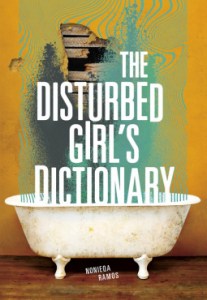
Review: The Disturbed Girl’s Dictionary by NoNieqa Ramos

thedisturbedgirlsdictionaryThe Disturbed Girl’s Dictionary by NoNieqa Ramos

My Rating: 3.5/5 TARDISes

Series: Standalone

Date Published: February 1st, 2018

Publisher: Carolrhoda Books

Pages: 344 pages

Source: Netgalley

Links: Goodreads | Amazon | Book Depository

Synopsis: Macy’s school officially classifies her as “disturbed,” but Macy isn’t interested in how others define her. She’s got more pressing problems: her mom can’t move off the couch, her dad’s in prison, her brother’s been kidnapped by Child Protective Services, and now her best friend isn’t speaking to her. Writing in a dictionary format, Macy explains the world in her own terms—complete with gritty characters and outrageous endeavors. With an honesty that’s both hilarious and fearsome, slowly Macy reveals why she acts out, why she can’t tell her incarcerated father that her mom’s cheating on him, and why her best friend needs protection . . . the kind of protection that involves Macy’s machete.

____________________________________________________________

*I received a copy of this book from the publisher in exchange for an honest review*

I have so many feelings about this book—some that are conflicting—but let me start out by saying that this is a wonderfully diverse novel. It focuses on many topics that I personally have not seen much, particularly in the world of young adult fiction. I found it very hard to collect my thoughts both during and after reading this story because of the quantity of thought-provoking material that is present. While my overall opinions on and experience with this novel were somewhat mixed, that in no way means that I did not truly enjoy reading it.

In this novel, we follow a fifteen-year-old girl named Macy, who is chronicling her life through entries in her own personal dictionary. Macy has been classified as “disturbed” by everyone—including herself—but really, she is just a teenager trying to survive in a horrible situation. Her father’s in prison, her mother treats her terribly and is too busy having multiple affairs to think about the welfare of her children. Macy has little to no food to eat and only a couch to sleep on, and on top of everything, she has just lost her little brother to Child Protective Services. However, Macy is not going down without a fight, and she will do everything she can to prove that she can beat the odds, as well as protect the people she loves the most.

The plot was not at all what I had been expecting going into the novel. Personally, I thought this sounded as if it would be sort of a dark mystery/thriller type story. It is definitely on the dark side, given the nature of the subjects it addresses, but that’s about all that it has in common with what I predicted—it is more of a heartbreakingly realistic, fictional recounting of a person’s life and hardships. This came as a huge surprise, though a good one, as I thoroughly enjoyed the powerful and impactful story that I found within these pages. It took me quite a while to wrap my head around everything that occurred—in a good way.

My absolute favorite part of this novel are the characters—they are beautifully crafted. Whether lovable or despicable, there is absolutely no denying that each and every one is multi-dimensional and highly memorable. Macy is such a wonderful main character and narrator. Her personality is so distinctive and vibrant, and she is someone who is very easy to care about and root for—she is strong, badass, and just plain awesome. Also, out of all the other characters, George is the one that I adored the most.

Ramos uses a writing style that is both very unique and not commonly seen in literature. The uniqueness comes from Macy herself and her personal way of voicing her thoughts. She relates her story using very choppy sentences filled with grammatical errors. This fits her absolutely perfectly, and truly adds a great deal to the way Ramos depicts her. Macy’s views on life have a distinct peculiarity of their own, which also contributes to both the realism and charm of her character.

On a technical level, the style used is most like a stream-of-consciousness narrative, as we follow the events of Macy’s life as they happen. Since Macy is narrating through entries in her dictionary, she is essentially writing out her train of thought. There is a very diary-esque feel to it, and her internal monologue is all over the place, another factor I found added depth and relatability to her as a character.

I will acknowledge, the format in which this novel is presented—stream-of-consciousness coupled with grammatical inaccuracies—may not be the easiest to read. However, Ramos does a fantastic job with it, and the more you read, the better it flows. I thought this stylistic choice suited the novel extremely well—I loved it, and I cannot see any other type of narration relaying Macy’s story as perfectly as this does.

I’m still trying to collect all of my thoughts, partially due to the fact that some of the issues I had with the novel conflict with aspects that a loved. I believe that many of my complaints stem from the style of narration that is used. However, as I said before, that style was absolutely perfect and really brought Macy’s story to life in a way no other type of narrative could have. As you can imagine, this is causing me a lot of difficulty when it comes to reviewing the novel—but I will try my best to explain things as clearly as I can.

Let me preface this by saying that I have absolutely no personal experience with the types of trials and horrors that the characters in this novel have to face on a daily basis. And while I feel as though I learned a lot from reading this, I will never say that I can even begin to understand the pain of being in these situations. The fact that any person, especially a child, should have to deal with these struggles upsets me to no end, and I have the utmost respect for the strength and bravery people have even during the of darkest times.

There were a few times where I struggled to understand certain events in the narrative. Admittedly there were some occasions where it was extremely obvious that the problem was simply my lack of knowledge on certain topics and not at all the actual writing itself. But there were also a number of instances where I felt as though more detail needed to be used in order to clarify what had taken place. This could be explained by the narration style, since a person writing entries in a journalistic way is bound to be less descriptive. Nevertheless, there were times when I wasn’t able to explain what had just happened.

On the other hand, even when I felt unsure of what exactly was happening in a scene, Ramos did such a wonderful job of crafting her characters that it never fully detached me from the narrative. She conveys the emotions so clearly, I could always relate and comprehend on that level, thus allowing me to remain closely connected to everyone. So, while I wish I could have some clarity about those particular events, it was less of a detriment to the plot as a whole than it would have been in most situations.

I also understand that this narrative can be a bit hard to follow and therefore might be a slow read. That is due to both the stream-of-consciousness format—which can make everything feel jumbled and random—and the obvious grammatical errors in Macy’s writing. The main plotline can be a bit tough to find because, having that diary style, the plot is not going to be as linear. Personally, while I did read through this a bit slower that I normally might, I found all of these qualities to be incredibly fitting to the story and Macy’s voice.

One very minor detail—and by minor, I mean I’m just putting far too much thought into things like always—that confused me a bit was the timeline of the novel. It comes across as though Macy is writing each entry in alphabetical order as it happens, since we do follow somewhat of a connected storyline. However, she frequently references other entries in the dictionary, many of which haven’t happened yet. Like I said, this isn’t a huge issue by any means, it just made it a bit unclear to me how exactly events were progressing.

The Disturbed Girl’s Dictionary is a book that I know is going to stick with me for quite a long time. It is an extremely eye-opening and powerful read that addresses many dark but incredibly important topics—ones that are hard to hear about but desperately need to be discussed. The realistic characters and vivid emotions really brought the events to life, and make this story an even more educational experience. I am so glad that I picked this up, and I very highly recommend giving this novel a read.

3.5 TARDISes

logo2

Mini Review: A Beautiful Composition of Broken by r.h. Sin

abeautifulcompositionofbrokenA Beautiful Composition of Broken by r.h. Sin

My Rating: 3/5 TARDISes

Series: Standalone

Date Published: July 25th, 2017

Publisher: Andrews McMeel Publishing

Pages: 480 pages

Source: Netgalley

Links: Goodreads | Amazon | Book Depository

Synopsis: r.h. Sin, bestselling author of the Whiskey, Words & a Shovel series, returns with a collection of poetry and prose meant to remind the wounded that they are, in fact, beautiful in a way society may never comprehend.

A Beautiful Composition of Broken is inspired by some of the events expressed artistically by Samantha King in the bestseller Born to Love, Cursed to Feel. It serves as a poetic documentary of the lives of people who have been mistreated, misunderstood, and wrongfully labeled in a way that limits them in this world. The author’s most personal volume yet, A Beautiful Composition of Broken builds a conceptual bridge between r.h. Sin’s earliest work and his forthcoming series, Planting Gardens in Graves.

____________________________________________________________

*I received a copy of this book from the publisher in exchange for an honest review*

I am so conflicted over this collection of poetry. Having enjoyed the previous two collections of r.h. Sin’s work that I’ve read, I really wanted to love this one. And at first, I was once again pulled in by his words. Unfortunately, my expectations were a bit too high, and I ended up feeling very disappointed by this collection as a whole. The quality writing that I have come to expect from Sin is definitely there, but the power and impact of his words is severely lacking.

The biggest issue that I have with this compilation is how incredibly repetitive it is. At the very beginning, the poems are deceptively unique. They are extremely reminiscent of his previous works, but not so much that they are completely uninteresting to read. However, it quickly goes downhill, as each poem begins to feel like the last—variations of the same exact story. Nothing is inherently bad about the poems themselves—they are still well-written—but the ideas and themes in them repeat to the point of monotony.

This collection feels very much like it is made up of cookie cutter poetry instead of many distinct pieces that come together to form a unified work. Everything ties together, but this is due to the fact that each piece comes across like it is the same exact poem articulated in a different way. It sucks out all of the emotion in the message he is trying to convey through his words, and things begin to feel forced. The poems start feeling cheesy rather than meaningful, and they take on an unappealing hollowness.

There are still plenty of redeemable qualities about r.h. Sin’s poetry, particularly the general beauty of his words. With his talent, I feel as though he could easily do so much better than this. If he varied his topics, even staying within the theme of love, betrayal, and eventual empowerment, this would have been a much more interesting and impactful reading experience. This has caused me to lose some enthusiasm about reading Sin’s work, but I will still be giving some of his other collections a try.

3.0 TARDISes

logo2